Romance is Dead, Long Live Romance

Romance is Dead, Long Live Romance

Liz Lemon: I scheduled a root canal for February 14th, Jack. I will spend half the day in twilight sleep, then I will go home and watch the Lifetime original movie “My Step-son is My Cyber-husband.”

Jack Donaghy: Wow, that is inspired. You are truly the Picasso of Loneliness.

30 Rock, S04E13: Anna Howard Shaw Day

I remember when I used to dread Valentine’s Day. I couldn’t stand all the giddiness and flowers, the cards, the chocolates, the naked, cherubic, rosy-cheeked little Cupids hanging from the ceiling. Instead of a day that highlighted what love was about, for me Valentine’s Day was a day that highlighted not being loved at all. I wanted so much to be one of the chosen and instead it was a day that made me feel like the ugliest stepsister at the ball.

So I hated it. Hated it like the Grinch hated Christmas.

And now?

Now, I find I don’t care all that much about it anymore.

Sure, you’ll say.  Of course you wouldn’t care about it, why would you? You’re married, you’re done, you’re off the market, the pressure to find a mate is gone.

Romance as we know it – surprise helicopter rides and impromptu candlelit dinners at the top of some revolving restaurant in some unnamed metropolis – dies hard when one is married. And it doesn’t just get snuffed out like a flame, oh no. No, no, no. You won’t get that at all. You won’t even get the displeasure of having it ripped off like some sort of metaphysical band-aid, nursing the sting one moment, moving on the next. Romance doesn’t just die overnight; it dies gradually, struck blind by the kind of I-woke-up-like-this face not even a mother could love, deafened by the snoring, asphyxiated by morning breath and all the careless farting, until twelve years later you wake up and realize that yep, it’s gone.

It’s probably age. We’re both older now, and I don’t know about him, but I’m the kind of old that sees most things as a chore, measuring a choice or an activity against the remaining time I may have left on this earth. A lot of things are prefaced with “do I have enough time to do this and wait for myself to like it?” Or, “Why am I really doing this?”

Keeping a marriage alive takes work. Hard work. Some days, you work hard to remember why you got married in the first place. The sometimes suffocating closeness of living in proximity with another person can take its toll. So no. No more schmoopy love notes. No more surprise flowers. No more spontaneous nights in hastily booked hotels, or ostentatious dinners in ostentatious restaurants, and ostentatious gifts to prove we love each other; right now, the most ostentatious thing we give each other is the fact that we’re still together, a grudging “I’m still here, aren’t I?”  which dissolves into mutual eyerolls and then a bit of a giggly cuddle.

Romance may be killed off as easily as the first sucker in a horror film, but love, now love is an entirely different animal. Love is a box of Michelina’s that gets eaten but replaced, making sure the “DO NOT EAT! EMERGENCY WORK FOOD” post-it looks just like it did on the original box because he doesn’t want you to know he ate it, but gets busted for it anyway. Love is putting up with getting pantsed. Love is getting dry humped randomly while doing the dishes. Love is waving at each other from the elevator. Love is surreptitiously patting him on the butt with a “giddy-up, horsie” as he pushes the yellow grocery cart at the local No Frills.

Love is the cockroach of emotions – it can survive anything, even a nuclear holocaust. And that’s okay with me. I don’t mind a little romance here and there, but I’m not going to let one single day dictate that I show it. Love is a tenacious little fucker, and if you ask me to choose between romance and love, I’ll take love any day of the week. 

We’re Fine, We’re Fine, We’re Fine

We’re Fine, We’re Fine, We’re Fine

I’ve been on straight OT the past two weeks, and it’s starting to show. Some days, I feel worn-out and miserable, so I’ve been cheering myself up by looking forward to another adventure.

If only finding a hotel was like playing pin the tail on the donkey; just slap a blindfold on and aim at whatever. Sometimes it feels like that. But hotels cost money, and spending it on a less than desirable one is like throwing your money away. And I’m poor. I’m not in a position to just blow it on whatever. So I end up obsessing about finding the perfect hotel – strategic location, non-shady area, decent digs, affordable price, you know the drill. If there’s anything agonizing about planning a trip, it’s always trying to find the best place to stay.

Lord, here I go again.

What a whiny, privileged post. Who has time to complain about work and how hard it is to find a place to stay, when people are dropping like flies over in China? I guess I do? I mean, what else do I have to write about? How I had sudden onset vertigo two Saturdays ago, and it freaked me out so much, I went to the clinic and ended up side-eying everyone with even the slightest hint of a cough, twitchy as a cat in a room full of rocking chairs? How I watched at least two people drop in to help themselves from the free surgical masks out of the courtesy box right beside a giant bottle of hand sanitizer, and scurry away without so much as a thank you? How it made me have to tamp down a bout of slightly hysterical giggles, the same way I did seeing Rexall’s “SORRY, OUT OF SURGICAL MASKS” sign, because what is this, a Gwyneth Paltrow movie?

I stopped checking my Facebook feed even more than usual. For a while there, it was nothing but arguments as to the correct way to wear a surgical mask (blue out/white in? white out/blue in? Jesus.), self-righteous, virtue signalling reminders not be racist in Chinatown and elsewhere, ridiculous articles seeking to pinpoint where the virus possibly originated (civet cats? rats? pangolins? bats?), and just fear, fear and fear. It’s only February! What is happening?

It’s never been easier to fall victim to mass hysteria than now, when we are all connected and hearsay is a tap and a swipe away.  Sometimes it’s best to rely on common sense. Observe proper hygiene. Eat well.  Don’t be a slob, wash your hands before eating, or rubbing your eyes, or picking your nose, or sticking your fingers in your mouth. Disinfect your phone. Take precautions. Don’t cough or sneeze on people. Wear masks if needed in public areas (who cares if it isn’t Hong Kong, this thing is potent). Common sense may only go so far in the face of what looks like a literally virulent sickness, but hey. Anything is better than being careless. (And, from the looks of it, being in Wuhan. I know, I know. Too soon.)

It wasn’t the best time to be at the clinic, that’s for sure. Not when the headlines were – and are – all about some worse-than-SARS virus that’s ripping through mankind like wildfire. Not when one of your closest buds is busy telling you how she’s made sure to Lysol everything including the kitchen sink, and you’re all agreeing that it’s best school stay suspended and keep the kids home – better safe than sorry- and all of a sudden you’ve taken a hard left into absurd territory by  swapping selfies of yourselves wearing masks, because apparently, that’s the takeaway. The world may be ending, but Hello Kitty masks will always be cute.

Be safe out there, you guys.

What Books Did You Read in 2019?

What Books Did You Read in 2019?

I can’t believe it’s time for another one of these already. The year flew by so fast it nearly gave me whiplash, and it looks like this year may be more of the same. One blink and look, it’s mid-January!

In an effort to counteract the effects of too much TV, one of the things I set out to do in 2019 was to read more than I had the year beforeI like to think I did marginally better, even if I think I watched too much TV anyway. 

Still, reading is not everyone’s cup of tea; The Atlantic has an excellent article on why it affects some and not others. For me, reading is and always has been a form of escape, more so than TV, and a gift bestowed to me by both parents. My mother taught me how to read, and my father taught me how to enjoy it.  Because they had me very young, none of their peers had children I could grow up and play with. Whenever they would go out and socialize, it was up to me to find ways to amuse myself.  My favourite of their friends to visit were always the ones who had little libraries, because then I could just pick something, get lost in it and wait for my parents to finish having fun. It sort of turned me into an introvert (some may dispute this, but I really am quite shy) but I wouldn’t change it for the world.

And so, on to the list! As always, my choice of reading material doesn’t follow rhyme or reason but the following may hopefully give you ideas for what to read next. About 95% were all read and available from Overdrive, the digital arm of the Toronto Public Library. I also list my top five books unforgettable books of the year. They may not have been published in 2019, but they are ones I discovered and would definitely recommend. That’s the beauty of a great book, the really good ones never age! To get to them, scroll down to the standouts section.

“Classics”
Cosmos – Carl Sagan
Breakfast at Tiffany’s (and Three Other Stories) / In Cold Blood – Truman Capote
The Remains of the Day – Kazuo Ishiguro

Essays
The Year of Magical Thinking – Joan Didion
A Grief Observed – C.S. Lewis
Meaning and History: The Rizal Lectures – Ambeth R. Ocampo
Brilliant, Brilliant, Brilliant Brilliant Brilliant- Joel Golby
The Faraway Nearby – Rebecca Solnit
Best. Movie. Year. Ever. (How 1999 Blew Up the Big Screen) – Brian Raftery

#CanLit
All Our Wrong Todays – Elan Mastai
The Gown – Jennifer Robson
Son of a Trickster – Eden Robinson
The Hungry Ghosts – Shyam Selvadurai

Historical Fiction
The Secret History – Stephanie Thornton
The Only Woman in the Room – Marie Benedict
Muse – Mary Novik
The Viscount Who Loved Me – Julia Quinn
The Lost Season of Love and Snow – Jennifer Laam

Non-Fiction
America’s Boy: The Marcoses and the Philippines – James Hamilton-Paterson
1494: How a Family Feud in Medieval Spain Divided the World in Half – Stephen R. Bown
Kitchen Confidential – Anthony Bourdain
The Lost City of the Monkey God – Douglas Preston
SPQR – Mary Beard
Imperial Woman – Pearl S. Buck
Girl, Interrupted – Susanna Kaysen
The Sisters: The Saga of the Mitford Family – Mary S. Lovell
Let’s Just Say It Wasn’t Pretty – Diane Keaton
Jackie, Janet and Lee – J. Randy Taraborelli
The Immortal Life of Henrietta Lacks – Rebecca Skloot
Three Women – Lisa Taddeo

Now Lush TV Shows (and one Major Motion Picture)
The Mountain Between Us – Charles Martin
Codename Villanelle – Luke Jennings
Good Omens – Neil Gaiman & Terry Pratchett
A Discovery of Witches / Shadow of Night / The Book of Life – Deborah Harkness

I Don’t Care What You Say, Re-reads Count:
A Game of Thrones – George RR Martin
The Constant Princess – Philippa Gregory
The Hobbit / The Fellowship of the Ring / The Two Towers / The Return of the King – JRR Tolkien

Everything Else
The Light Between Worlds – Laura E. Weymouth
Aug 9 – Fog – Kathryn Scanlan
Gods Behaving Badly / The Table of Less Valued Knights – Marie Phillips

The 2019 Standouts
Educated – Tara Westover
What a whopper of a story this is. Tara Westover’s chronicle of a childhood spent homeschooled, raised on a farm with parents who felt the apocalypse could come any time is a hell of a memoir, and a great way to gain perspective – if you felt your childhood was horrible, you haven’t met Tara. It’s also a story of hope, and of how the love of learning can never really be stifled, a powerful reminder that dreams do come true if you want something badly enough and work hard enough to get it.

The Jaguar’s Children – John Vaillant
Although fictional, its protagonist finds himself in a very familiar, heart-wrenching position  – trapped inside an abandoned water tanker that is used to transport illegal immigrants over the Mexican border into the land of the free and the home of the brave, with a dying cellphone as his lifeline and only one number with an American country code. Told in stream of consciousness first-person, interspersed with a series of increasingly agitated text messages, The Jaguar’s Children is claustrophobic, terrifying and very difficult to put down and walk away from.

Lincoln in the Bardo – George Saunders
Like The Graveyard Book on drugs,  Lincoln in the Bardo reads as if DJ Earworm suddenly got literary and decided to do a mash-up of books, newspaper articles and quotable quotes. A re-imagination of events after death of Abraham Lincoln’s youngest son Willie, it’s an unusual book, and an acquired taste.  Reading the first few paragraphs may seem a bit strange, but the story comes to life as you settle into the rhythm and flow of George Saunders’ unique, award-winning experiment in prose.

Over the Edge of the World: Magellan’s Terrifying Circumnavigation of the Globe – Laurence Bergreen
As a Filipino, Magellan is a byword for the discovery of the Philippines, and its subsequent conversion to Christianity. To some of us, Magellan is an interfering, unscrupulous intruder who got what was coming to him. To the Spanish, he was a fearless crusader and adventurer. To the world, he was the one who braved the unknown in search of riches and glory. Magellan’s legacy may be a polarizing one, but Laurence Bergreen’s story of how he conquered unknown seas to prove that the world was truly round is arresting, and an educational insight into the social and economic mores of the time.

On Writing – Stephen King
Part autobiography, part how-to, with zero pretensions, On Writing has earned its status as the unofficial go-to for aspiring writers.  I’d always read about it mentioned by writers I admired, and finally decided to take the plunge and read it myself. It’s accessible and non-patronizing, and incredibly humanizing, especially when one is confronted with the true body of Stephen King’s work, definitely something that should be re-read at least once a year, if only for the kick in the butt it administers. My 2019 takeaway? Adverbs are anathema!

The 2010s Ruined Some Words for Me, and Here They Are

How did your New Year’s celebration go? Was it happy? Was it sad? Did it have fireworks? Mine came and went with a sort of sputter, because Le Hubs was at work and I didn’t feel like going out to mingle with strangers in Nathan Philips Square. So I stayed home, opened the doors and made sure I was clutching bills when the clock struck twelve. (That’s a Filipino tradition. Holding money ensures a steady supply in the coming year, and open doors usher in good fortune – it’s really more like welcoming in the flu when you do it in the dead of a Canadian winter, but I do it anyway.)

clutch moneeyyyy 2
Big moneyyyyyyyy!

There’s been a lot of hue and cry about entering a new decade, and a lot of thinkpieces on how the 2010s have shaped and changed the world as we know it. It definitely feels like a decade where we went from zero to sixty in no time flat. It’s not a very pretty picture at the moment, with all the ridiculousness going on – careless leaders, divisive issues and all that. If there’s anything this decade, especially its latter half, has done for me, it’s to highlight the slow, lingering death of discourse, the seeming end of common sense, and the egregious abuse of some truly lovely words in the popular lexicon that will never be the same for me again. I’m all for slang, but some things just can’t be borne.

Without further ado, here are some of the words the 2010s have ruined for me:

Influencer – One of the worst things to come out of the 2010s. It’s at the top of the list of words (and people) that make me cringe. It’s a made up word for a made up concept, a hot air bag of a self-appointed title for pretentious wannabes who believe their lives are worth emulating and use it to take advantage of the gullibility of others. Seeing it makes me want to claw my eyes out and scream at society at large for celebrating so much vapidity. While we’re here, you may as well throw in curate/curated. Blech.

Iconic, Legendary, Epic, Massive etc. – No. Stop. Stop it. Stop it right now. These adjectives are hard-earned, and it can take a lifetime to earn them. For the love of all that’s holy, they are not herbs to be sprinkled liberally over everything.

Literally/Actually – I am literally losing my mind at how many valley girls actually exist based on the actually extensive usage of literally, which, actually, is literally always used out of context. It actually makes the ones who overuse it literally come across as, actually, idiots. Literally.

Cancelled – is for airline flights. And TV shows. And credit cards. It is not for human usage. You cannot cancel a person, no matter how badly you want to. If a person still breathes, “cancelled” is the wrong word. Please consider using kill, murder and/or eliminate if you really feel that strongly about pronouncing someone’s life as over. Bear in mind you will have to go and actually do the deed first.

Everything – as in “… and it was everything.” No it wasn’t. It was just steak. Stop being lazy and find an appropriate descriptor. And no, you are not allowed to use iconic, legendary or epic. Or say that you were shook. Once again, it was just steak. Jesus.

Shook – or any iteration of this when it is intended to mean overwhelmed. Like shooketh. The correct word is shaken, but… you know what, I give up. These are special times. Sigh.
There’s still triggered, and snowflake, and slay, and savage. And, it seems fairly recently, pure. Please, not pure. Why? What did the English language do that was so bad we have to slaughter it this way?

I quit doing resolutions a while back, because they never work. Still, in the coming decade, I resolve to avoid websites that overuse all these words like the plague. You know the ones. The ones where headlines read like they were barfed out by a random SEO-driven headline generator that runs on 100% high-octane hyperbole. “A massive XXX happened and now everyone is upset.” Ugh. No more rubbish. No more clickbait. Nothing against them. I’m just old now, and unable to take too much of juvenile, half-assed, under-researched, hastily written shit. (Mine is an exception, but that’s because I came up with it, lol.)

Also, I need to stop drinking so much milk tea.

Happy 2020, everyone!

Vamos España 3 of 3: The Pink Ranger (Barcelona)

Vamos España 3 of 3: The Pink Ranger (Barcelona)

Spain is the countrified equivalent of the Power Rangers.

Like them, Spain is a collection of autonomous regions with their own personalities, strengths, abilities, cultural flavour, symbols, history and, in some cases, official language. The emphasis here is on the word “autonomy,” in that each autonomous region governs itself, having their own parliament and their own set of laws, called Statutes of Autonomy. Put all these autonomous regions together, and you get Spain. The regions are the Power Rangers and the combination of their Zords (Mastodon! Pterodactyl!) make Spain a MegaZord. Yes, my childhood was lovely, thank you.

In non-crazy, non-early ’90s teen-speak, if the European Union is an amalgamation of countries, Spain is its microcosm. It must be very like trying to control a team of wild horses, with each one straining at the bit to go whichever way they want to go. Imagine those unique, multi-faceted autonomous regions uniting to make one great nation and country under God. However convoluted it may sound, these crazy Spaniards make it work.

It’s true that each region has its own distinctive character and taste – even smell. Having spent days exploring the haughty grandeur of Madrid, and the graceful beauty of Granada, arriving in Barcelona was a splash of cold water. It was like stepping into a time machine and being thrown into a completely different era. If Madrid is the Red Ranger (leader, big brother, stoic and strong) and Granada the White Ranger (formerly bad, now good, always and forever the hottest), Barcelona would be the Pink Ranger.

I thought I knew what grand was, having seen the palaces and gardens of Madrid, and the imposing citadel of the Alhambra. Barcelona took the word grand, and shot it into the stratosphere. It’s huge. Its roads are wide and its buildings take up so much space, it makes Madrid seem almost cramped by comparison.

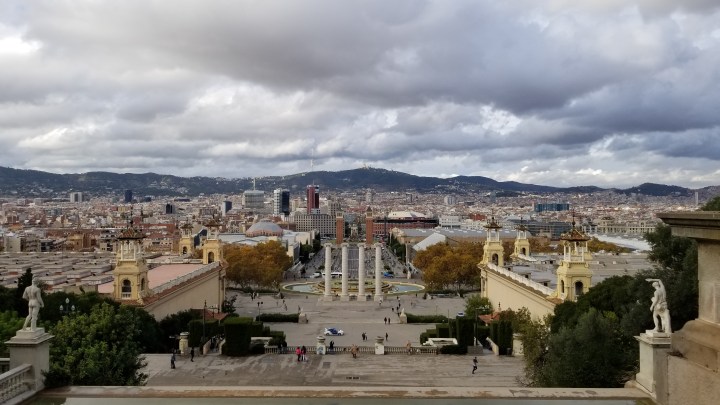
20191122_151830
Barcelona’s urban sprawl, as seen from the top of Montjuïc on an overcast day
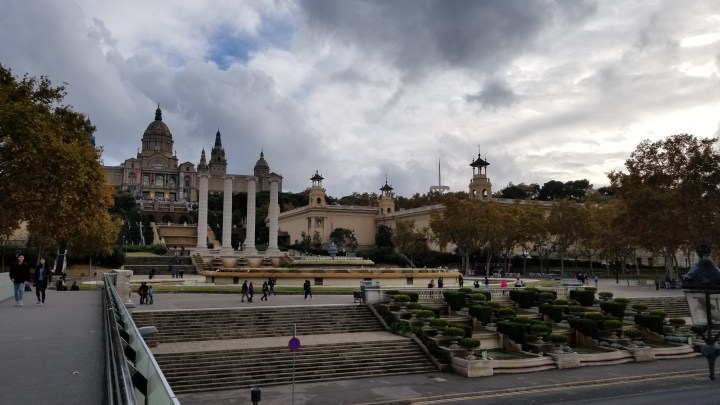
20191122_150507.jpg
The Parc du Montjuïc

The jewel of the autonomous region of Catalonia, the city moves to the beat of its own drum. Barcelona is deceptively young. It was a Roman city in the Middle Ages, so it isn’t really young at all, it just seems to have drunk from the Fountain of Youth somehow. It’s colourful, and bright, and fast-paced, and weird, and eclectic and you can feel its sheer, unbridled joy and delight in just being different. It seems to be a city that hasn’t forgotten the glories of the past, but is busy making sure it stays relevant and on the cusp.

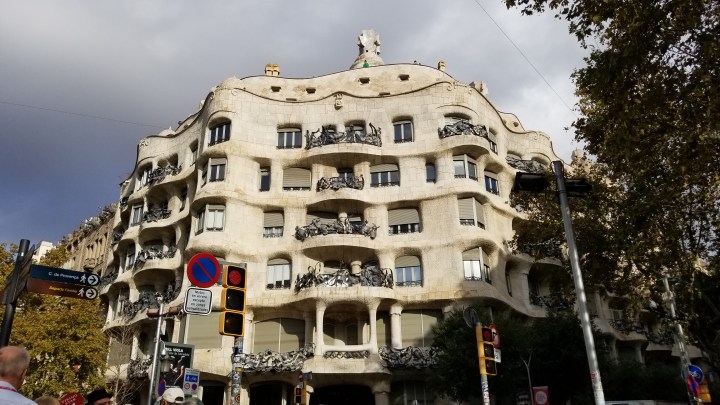
20191121_173913
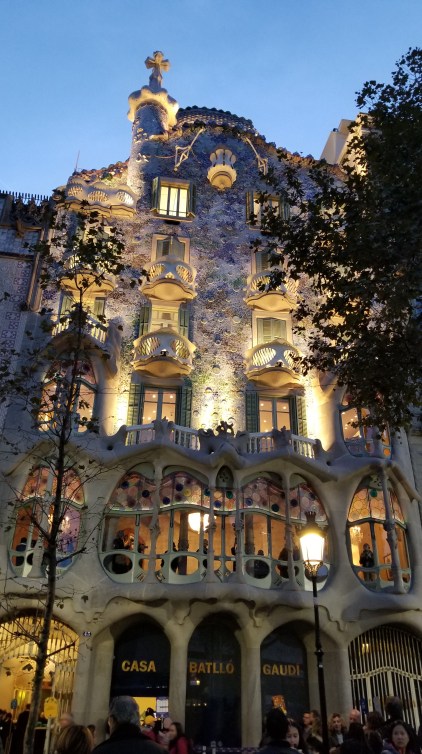
Casa Battlló

That modern feel is fitting, because its most famous son was at the forefront of Catalan Modernisme – a cultural revival of what it meant to be Catalan. Antoni Gaudi was the architect of much that would give Barcelona its new international identity. His most famous masterwork, the Basilica de la Sagrada Familia is, of all the truly wonderful landmarks of Barcelona, the one whose identity is irrevocably bound up in that of the city. Just as huge, just as grand, just as unbridled as the spirit of Barcelona itself, it’s an architectural marvel. And, like Barcelona, it’s not yet done (they broke ground in 1882!) . Some wonder if it ever will be.  Blog Sagrada Familia, its official architecture blog, is a great source of information, and a way better resource than listening to a travel guide drone on and on!

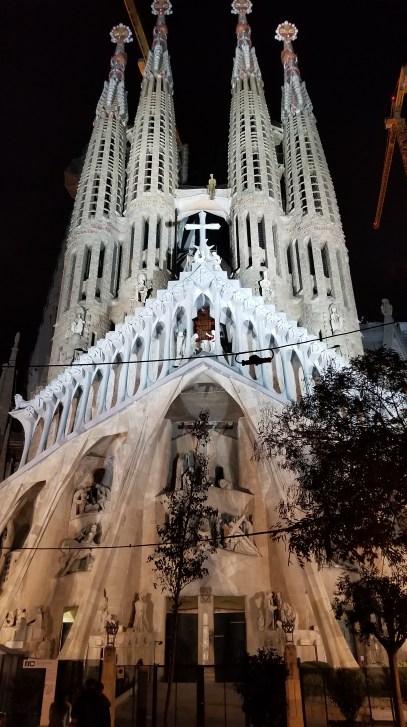
I first saw The Sagrada Familia at night. There was no rhyme or reason to the timing; the bestie and I had met up for an ultimately underwhelming dinner in the Gothic Quarter, walked to the Arc de Triomf, and, not ready for the night to end, realized the church was in the general direction of wherever we were headed (nowhere – sometimes, being aimless is fun), and decided to go and see it for ourselves.

20191121_213016.jpg
Sagrada Familia: Passion Façade (Night)

The Sagrada, as envisioned by Gaudi, has three facades: Passion, Nativity, and Glory. Of the three, it’s only Glory that’s still in the beginning stages of construction; the Nativity was the first to be completed, while the Passion was completed in 2018 (it took 64 years). I knew none of this when we first saw it that evening; I expected a convoluted construction site and got slapped in the face with the sheer ambition and scale of Gaudi’s genius instead. I just knew I had to see it in the full light of day.

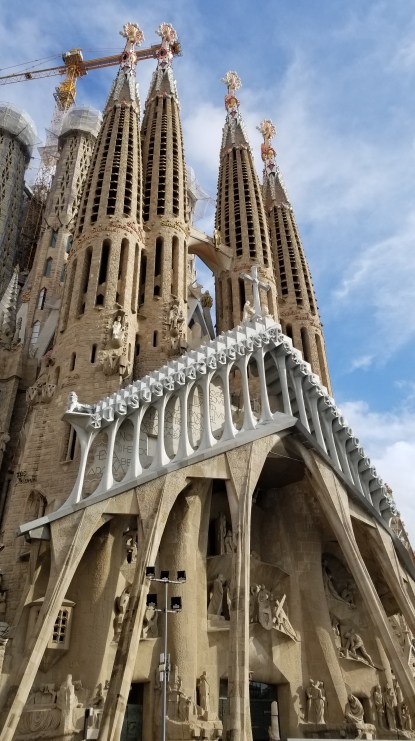
20191122_120237
Sagrada Familia: Passion Façade (Day)

Day or night, the Sagrada is a marvel. Not everyone is fortunate to be gifted with the ability to bring the fruits of a fertile imagination to life. We spent a good half an hour staring up at the Passion facade, completely flabbergasted. Bowled over. Thrown for a loop. Gobsmacked. Words fail. The attention to detail is ridiculous. It’s stark and forbidding, a message of suffering and pain, as Gaudi intended it to memorialize the suffering of Christ in his last days. It is said that he decided to completed the Nativity facade first because he thought the Passion might render anyone who viewed it averse to continuing construction.

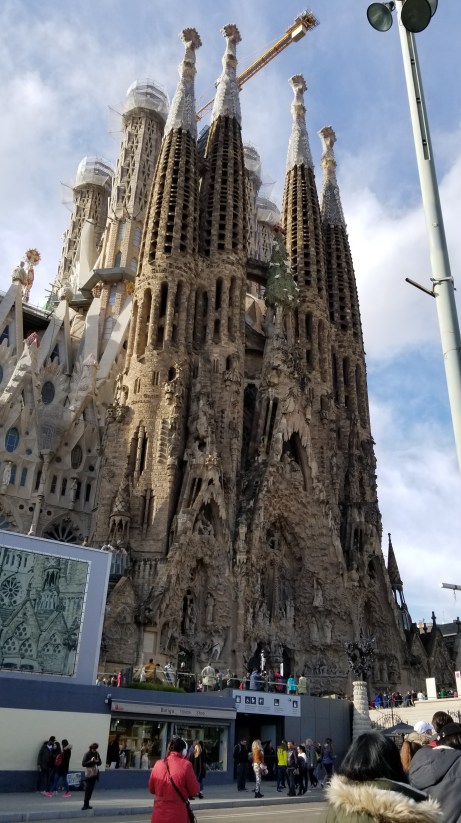
20191122_112857
Sagrada Familia: Nativity Façade (Day) – time has weathered this side of the basilica, and it is a lot more colourful than it looks

I don’t think I took as much photos as I thought I had. A lot of what I did get to take doesn’t come close to what it actually does look like in real life, which made it a bit frustrating. To be fair, there’s only so much the camera on one’s smartphone can do, and I admittedly am not the best at finding great angles (I am also generally #nofilter because I am lazy), but mostly it was because I was too busy gawking. Sometimes trying to capture a moment ruins it, and it’s best to just stand there and take it in. And that’s not just true for the Sagrada, it’s true for the rest of the city, and for the whole of this last great adventure of the year.

There is more to Barcelona of course, than Gaudi. I had a lot of fun hopping on and off public transportation, feeling like a local. The most affordable way to see a city in the shortest amount of time is to take public transit, and Barcelona has a lot to be proud of when it comes to that. I respect cities with efficient transit (if only because mine can be oh so frustrating sometimes), and it’s very easy to get around in Barcelona. The food was quite good, too.  It’s a very metropolitan city, and at first I didn’t feel quite as attached to it as one would like, but that was because I had left my heart in Granada.

Just like the Power Rangers, we all had a favourite, and  Granada (the White Ranger) was mine. There was so much of it I didn’t get to see, and so much more to explore. If I ever do manage to go back to Spain, it will be to Granada – and Andalusia – I will return. This time, Le Hubs has said he’ll come along, so that’ll be a wholly different experience!

Vamos España 2 of 3: The Princess and the Pomegranate (Granada)

Vamos España 2 of 3: The Princess and the Pomegranate (Granada)

There was crying in Granada when the sun was going down
Some calling on the Trinity, some calling on Mahoun;
Here passed away the Koran – therein, the cross was borne
And here was heard the Christian bell, and there, the Moorish horn.

Te Deum laudamus! was up the Alcala sung
Down from the Alhambra’s minarets were all the crescents flung
The arms thereon of Aragon, they with Castile’s display;
One king comes in in triumph, one, weeping, goes away.

– John Gibson Lockhart, The Flight From Granada (translation from an old Moorish ballad)

So goes Catalina, a young infanta of Spain, who is recounting the events of her parent’s triumph to her new husband, an enraptured Arthur, Prince of Wales. They are in a drafty castle in Ludlow in the dead of winter, and Arthur has requested that she tell him a story.

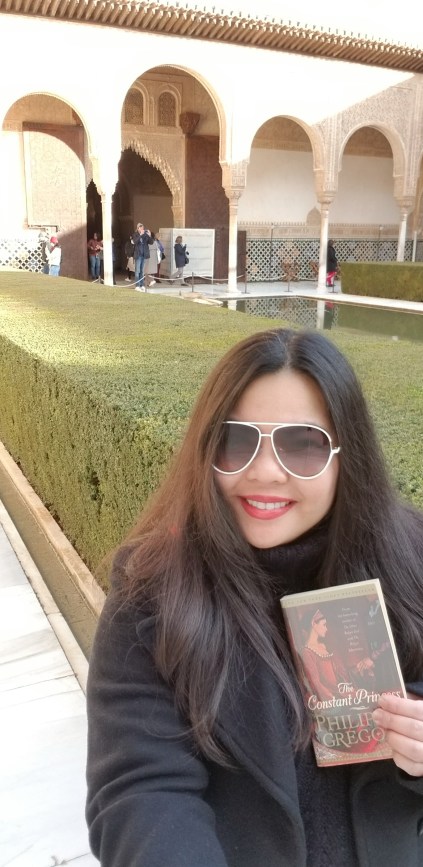
It’s one of many dreamy, arresting passages in The Constant Princess, Philippa Gregory’s fictional re-imagining of the early life of Katherine of Aragon – as Catalina would eventually come to be known – the first and most accomplished of all the six wives of Henry VIII. The fall of Granada is a story worth telling, made all the more dramatic because it’s true. In the last days of the Spanish Reconquista, the Catholic monarchs Isabella of Castile and Ferdinand of Aragon pushed out the last of the ruling Moors in the south of Spain, unifying the entire peninsula and establishing Granada as the seat of their power, taking up residence in the great citadel of the Alhambra. The palaces within the fortress of the Alhambra is where Catalina spent her childhood, and the book became the main inspiration for this trip, so much so that I brought it with me!

20191120_095721.jpg
What a nerd, lol

Have you ever had a fleeting dream, where you think to yourself that someday, given the chance, you’ll go and do something, or see something, or accomplish something, all the while telling yourself  it’s probably never going to happen? The Alhambra was one of those dreams for me. At the time I didn’t quite know how that dream could possibly come true, if it ever even would, and so I tucked it away and out of sight like we do so many of our private aspirations.

Walking up the road on the hill that leads to the citadel (I would’ve bused, but something was going down with Granada’s buses that morning, and I really really couldn’t afford to be late – they only let you visit the Nasrid Palaces within the complex at a particular time), each time I paused for a minute to try and catch my breath – it is a very high hill – I felt like pinching myself, because it almost didn’t feel real. I was finally, finally going to see a place I had only read about, a place that lived in my imagination, filtered through the lens of a Philippa Gregory novel. Was it real? Was it going to be as gorgeous as Catalina had described? Or would I be disappointed? Would it turn out to be less than what my fevered brain had conjured?

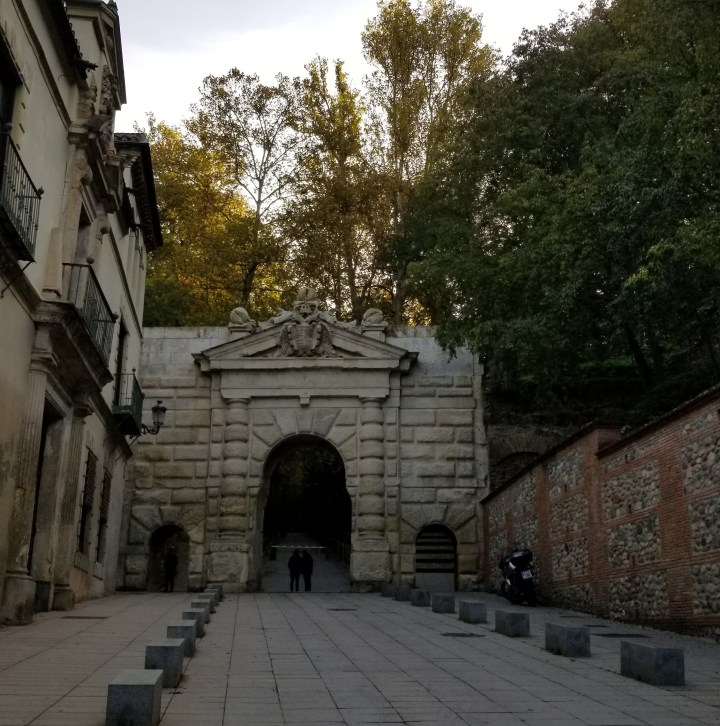
20191120_092013.jpg

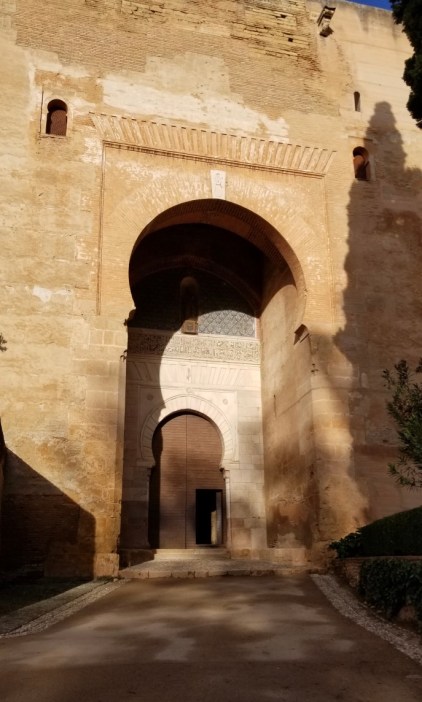
It’s forbidding, isn’t it? The Gate of the Pomegranates is a high stone gateway  that looms over the original road into the fortress (it now has about two other access points), invoking visions of horses clattering through its arches, medieval knights astride, pennants blowing proudly in the breeze. The sound of water begins almost immediately, two streams flow on either side of the path, and the air is fresh and clean, the sunlight filtered by the leaves of the many trees within the complex, all leading up to the Door of Justice, the original entrance to the Alhambra.

HXB9f2n9TrmbhrdIvB1tgg_thumb_4e8.jpg
Not doing justice to the Door of Justice

In retrospect, it was a good thing busing didn’t work out, because getting into the Alhambra by the Door of Justice is the fastest way to skip the queue (do not do this if you do not have a pre-purchased ticket with a QR code).  The road starts at the foot of the hill, at the Plaza de Santa Ana.  A bus would’ve taken me to the new, contemporary entrance, and I would’ve missed the walk through a picturesque, tree-lined pathway.

The pomegranate is the heraldic symbol of Granada, and the origin of its name (Spanish: granita).  It symbolizes many things, chief of them prosperity and fertility. When Catalina went to England, she adopted the pomegranate as her symbol too. It’s a fitting symbol for the Alhambra as well. Alhambra means “the red one”, and like the fruit, it is red on the outside and deceivingly plain. Crack a pomegranate open and a wealth of jewel-like seeds is revealed; similarly, enter the Alhambra and a priceless work of art reveals itself to the eye.

syqxdBdtTZeqhSDAexyVLQ_thumb_4eb

VuUmq%AvRl6l42E6s23mPA_thumb_4ed.jpg

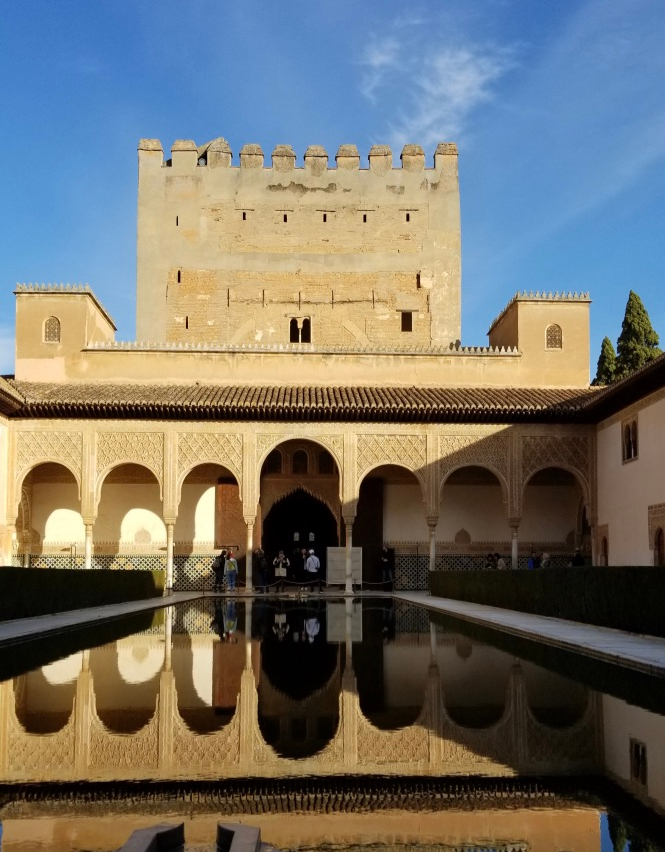
Nowhere is this beauty more prevalent than in the Nasrid Palaces, the residential part of the complex, where the Sultans and Sultanas of the Nasrid Dynasty lived.

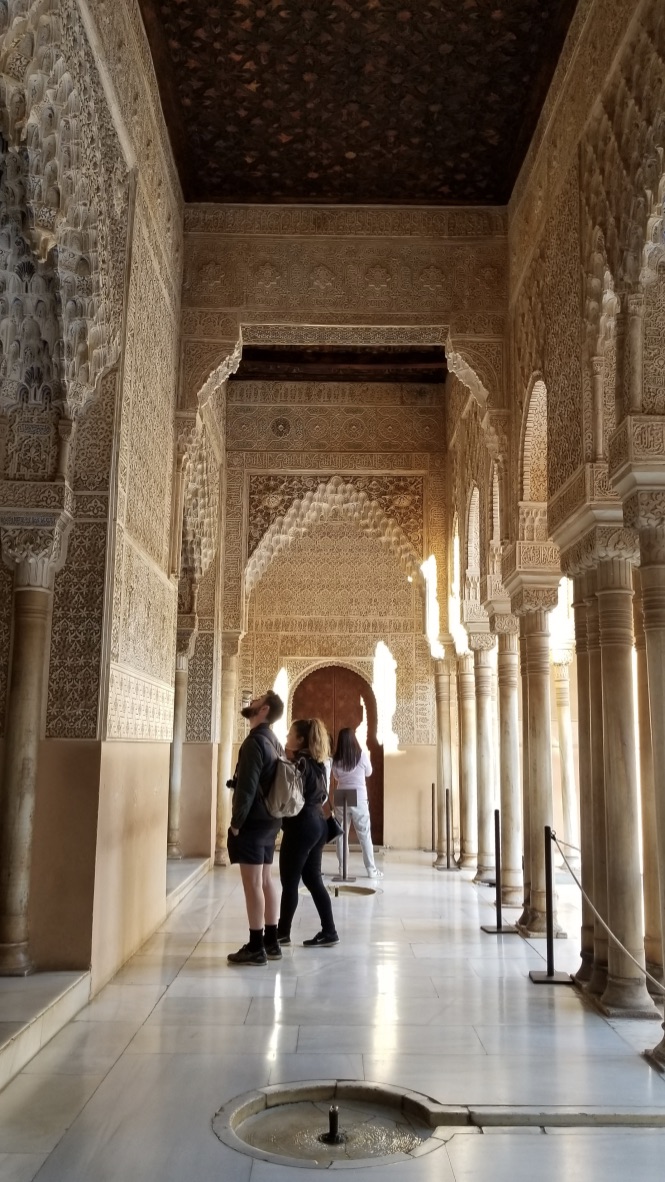
The palace is absolutely breathtaking, made even more so because all of its interior is made by hand. Carved and shaped by master masons of the era, lines of Arabic inscriptions decorate walls of stucco, interspersed with flowers and botanical motifs.  Water plays a large role in the palace. There are fountains and reflecting pools all throughout and the sound of running water is like music in the background. Trees heavy with oranges and pomegranates abound, and I really really wish the photos I took could do justice to it all, because they don’t come close to showing how stunning the palace is at all.

20191120_102419.jpg

p4lfyKkzSxm8KjxsFDJiQQ_thumb_4ee.jpg


Screen Shot 2019-12-08 at 9.53.06 AM.png

a7mQsIszRwyokAStu0QR1w_thumb_4f6.jpg

UNADJUSTEDNONRAW_thumb_4f9.jpg

20191120_111351.jpg
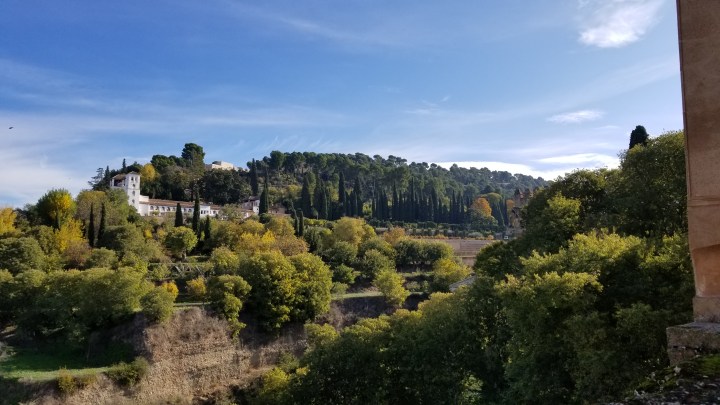
The Palacio de Generalife, as seen from the Nasrid Complex

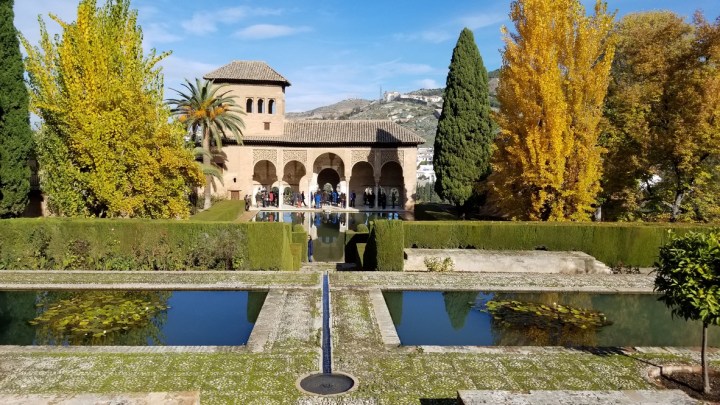
The Moors added to the complex as they went, and the summer palace of the Generalife (pr. He-ne-ra-‘li-fe) was one such addition. It was where they went to escape the heat during the hot summers, and is a pleasure garden that in its own way is as breathtaking as the Nasrid palace.  There is the same intricate plasterwork, although not at the same dizzying scale, and reflecting pools and fountains abound. It’s easy to forget your cares in the Generalife, and who could blame you?

UNADJUSTEDNONRAW_thumb_4fa.jpg

20191120_122450.jpg
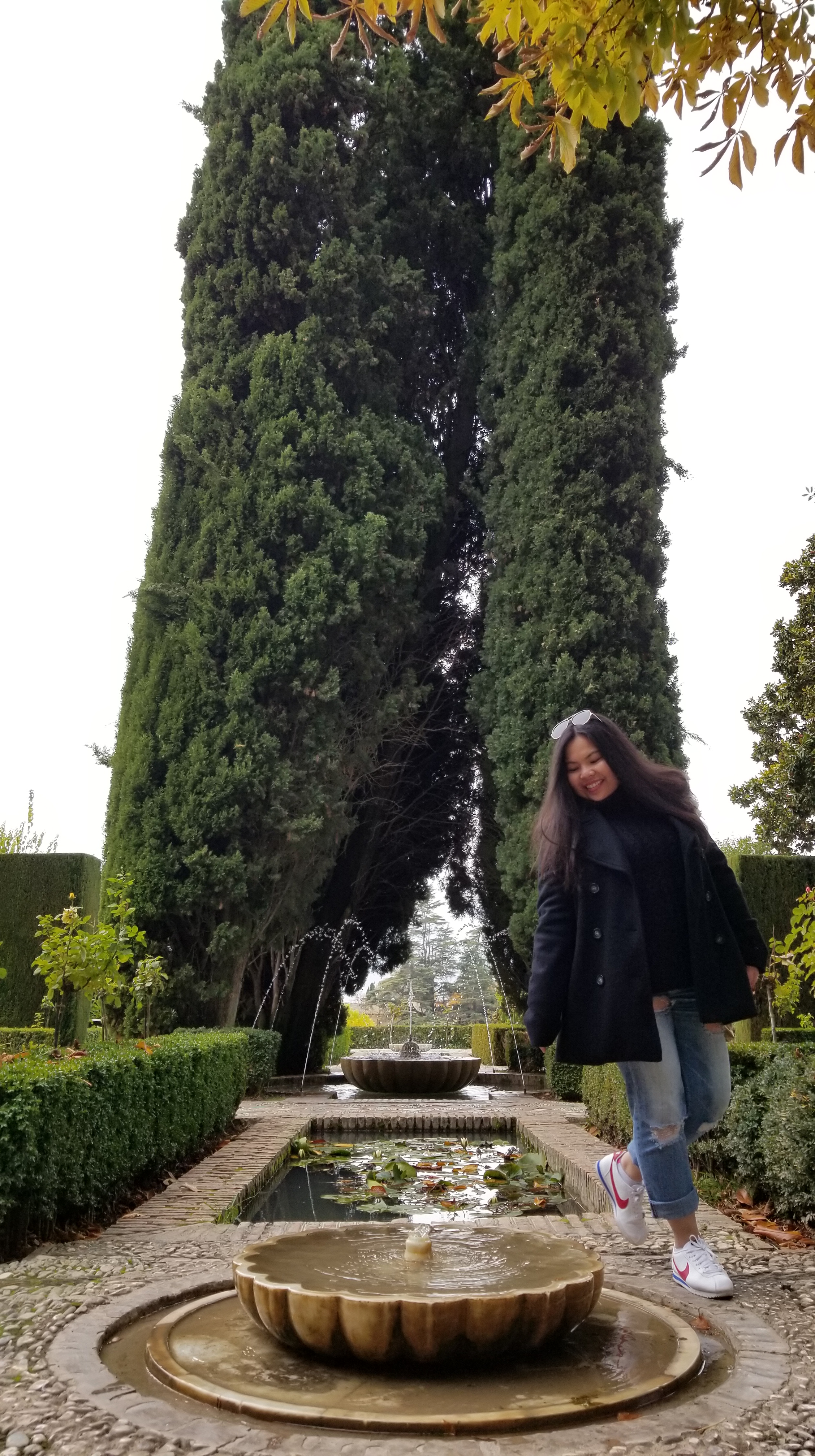
In the gardens of the Generalife

When Boabdil, the last Muslim ruler in Spain, left the Alhambra for the last time after surrendering it to Isabella of Castile and Ferdinand of Aragon, he wept. His mother, who was with him at the time, was said to say “You weep like a woman for what you could not defend as a man.” Imagine his pain (and her rage) at being forced to leave a home designed to be utter paradise on earth.

For myself, I didn’t quite weep when I left it, but I understood the urge to. I did sigh, happy to have enjoyed it for a day (you can easily spend the better part of a day there – I didn’t even include photos of the Alcazaba and the palace of Charles V), and regret at having to leave. Then I began the walk downhill, back to the city centre, pausing every now and then – it is a very steep incline, and if the walk up is hell on your thighs, the walk down is hell on your knees!

Vamos España 1 of 3: The Bear and the Strawberry Tree (Madrid)

Vamos España 1 of 3: The Bear and the Strawberry Tree (Madrid)

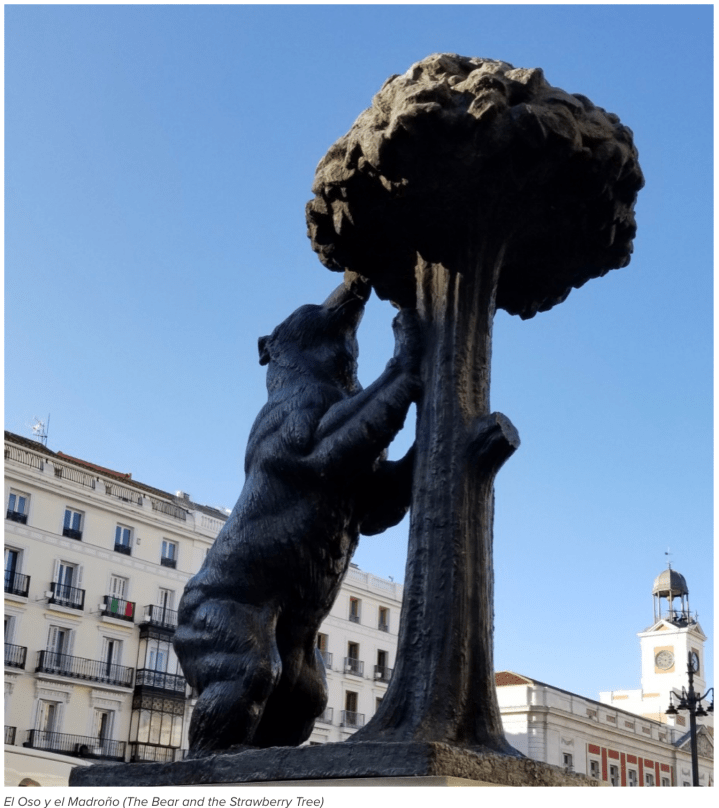
“A strawberry tree? Preposterous!” I thought, having never heard of one before. The strawberries I am familiar with grow on vines in cool climates, hugging the mountaintops of Baguio City. So when I learned that Madrid’s coat of arms features a bear rearing up to prise strawberries off a tree, I was intrigued.

Other than the name, it turns out the strawberry tree and the common strawberry as we know it are completely unrelated. Part of the evergreen family, the strawberry tree is found in the Mediterranean and parts of Western Europe and is favoured by bears and other animals for its fragrant and luscious fruit, which look like spiky little lychees. One particularly interesting tidbit is, if left to ripen on the branch, its fruits start to ferment. This can result in some very drunk bears, which is apt because it is entirely possible (and ridiculously easy) for a person to get drunk in Madrid, and not just on alcohol.

Like meticulously aged rum, Madrid is intoxicating. It’s old, a Miss Havisham kind of old, an aging but elegant aunt draped in all her finery, surrounded by art and the mementoes of the past, smelling of cigarettes*, helpless against the slow march of time, yet glorious despite its slow decay.

And it’s grand. Boy, is it grand. It’s a sprawling city filled with ostentatious town plazas, wide avenidas,large rotundas and sprawling parks and gardens; with daunting castles and baroque aristocratic homes that reflect the power and pride of the Habsburg – and, later, the Bourbon – dynasty, and the elevation of Spain in its prime.

It was, of course, virtually impossible for me to cover all of Madrid in two days, which is all the time I had allotted for this most grand of cities. So I did what I could, focusing on the Centro district, which houses the older parts of the city. Although Madrid is now very much a modern city, with infrastructure befitting the nation’s capital and the centre of Spanish commerce, a very impressive number of its historical neighbourhoods and landmarks still remain for us to appreciate.

Palacio Real de Madrid (The Royal Palace of Madrid)
20191118_112216
The Palacio as seen from the Jardines de Sabatini

Can you say you’ve been to Madrid if you haven’t been to the Royal Palace? It’s one of the most recognizable landmarks in the city. With over three thousand rooms, it is the largest functioning royal residence in Europe, and dwarfs Buckingham Palace in size. I didn’t bother booking a visit inside, because I knew it would take at least a day to fully appreciate its grandeur.

20191118_164957.jpg
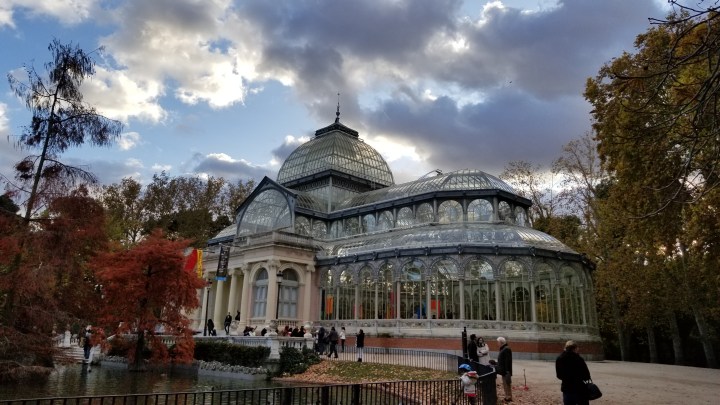
Palacio de Cristal, Buen Retiro Gardens
20191118_173817.jpg
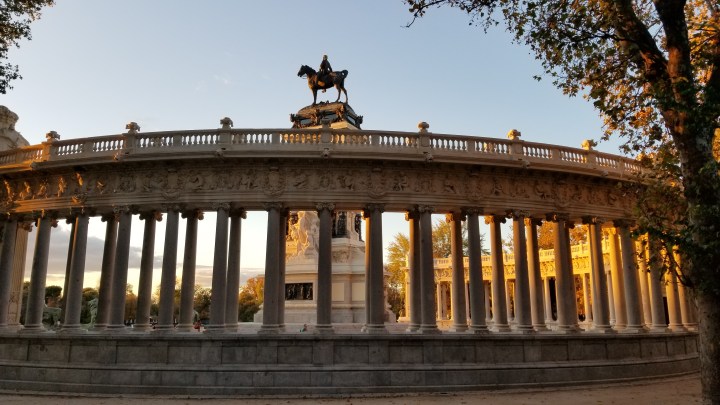
Part of the Monument to Alfonso XII the Peacemaker, Buen Retiro Gardens

I was fortunate to get to the Buen Retiro Gardens just before sundown, which gave it an almost ethereal quality. If you’re short on time, it’s important to know which parts of the park to visit before visiting, because it is quite huge. Not Central Park huge, but still, huge. I went primarily for the Crystal Palace, built for the Philippine Exposition of 1887, and by happy chance stumbled onto the monument to Alfonso XII just as the sun was about to set. Bathed in the shadows of dusk and the last gasp of a setting sun, it was a delight.

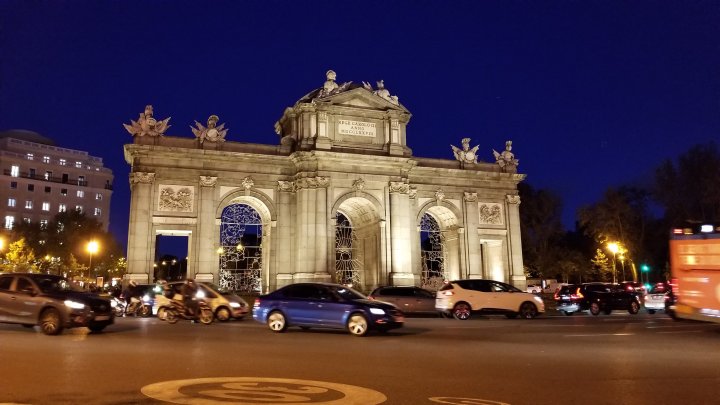
Puerta de Alcala
20191201_0850094842909199207628472.jpg
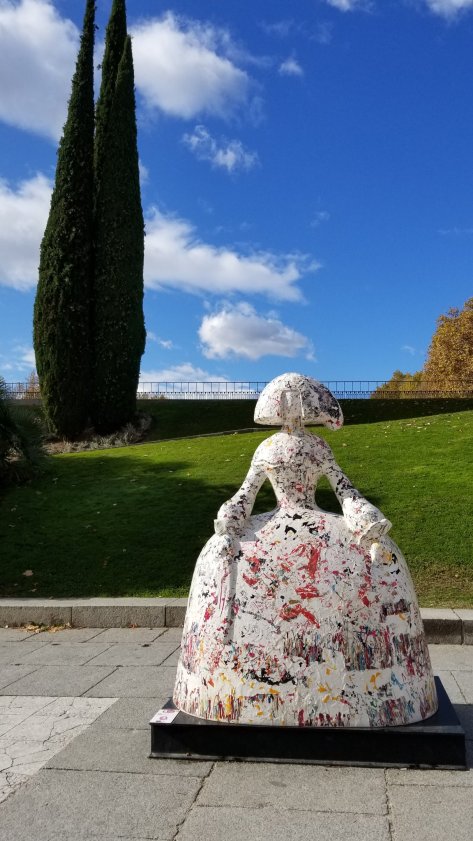
One of Madrid’s many Las Meninas sculptures. This one sits outside the Temple of Debod
Secret Nun Cookies!

secret nun cookies

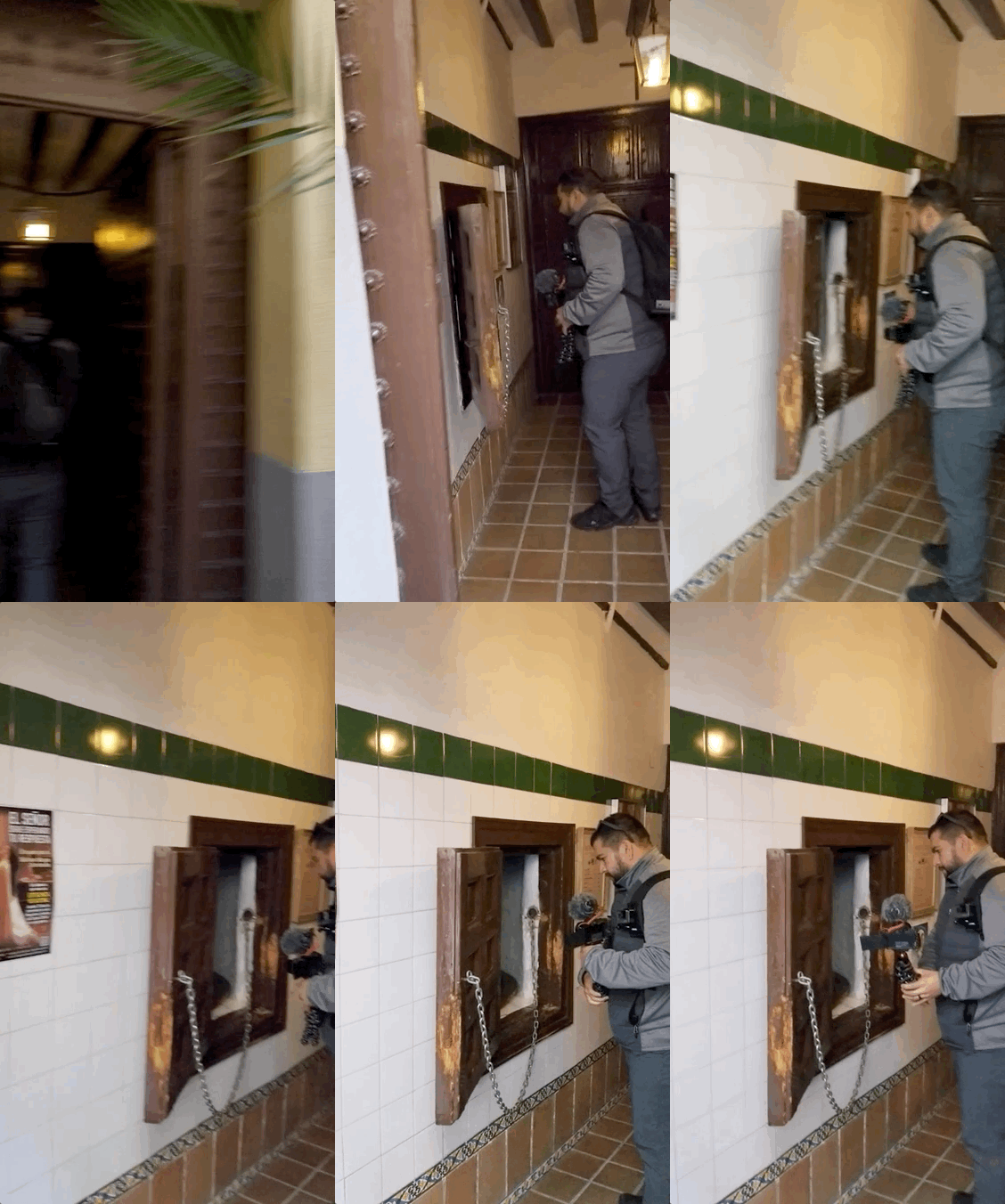
If you ever do find yourself in Madrid, do go for the not-so-secret secret nun cookies. Baked by the cloistered sisters of the Monasterio del Corpus Christi, getting your hands on these can be quite an adventure. It involves navigating a few confusing back streets, finding the right door, and knowing what to ask for – a particularly difficult feat since the nuns of this monastery do not interact with the outside world. We lucked out when we followed this one guy who seemed to be creating his own documentary, because he knew how to speak Spanish and helped with the buying process (that’s him in the .gif!). When ordering the cookies, one has to place the money in a sort of blocked out lazy susan that spins, without you seeing the person giving you the order. When it spins back around, your money is gone, replaced by cookies, and then it spins one more time (if needed) to give you your change. It feels deliciously illicit. Tom of Boingboing has a great how-to guide, if you ever want to undertake it yourself.

el gordo
The queue for the El Gordo lottery

The hotel I stayed at was just off the Gran Via near the Puerta del Sol, just up the street from the Doña Manolita lottery. The line-up was insane. Insane. It’s the only word I can use to describe it, the photo doesn’t even show half of the line-up, which stretched around the block. I didn’t know why this little lottery place was so hot, people were willing to stand in the rain and cold just to get themselves a ticket, but this piece on The Local explained it all. It’s considered a Spanish tradition to take part in the El Gordo (The Fat One) Lottery come Christmastime, and Doña Manolita’s branch is famous for selling tickets that eventually turn out to be the winning ones!

20191119_144603.jpg
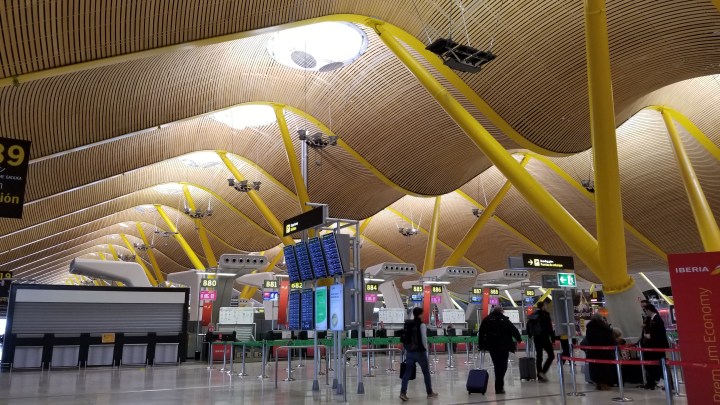
The colossal Terminal 4 of the Madrid Barajas Airport  makes you feel like you’re underwater

I told the bestie I was treating this trip as an all-you-can-eat buffet, attempting to absorb as much of Spain as I could in a very limited amount of time. I know, I know. It’s an exercise in futility, because there is so much of it to absorb and there was no way a week would enough to try to hold all of it in. But I tried, anyway. And I don’t regret it. In Madrid, I felt like that bear in their coat of arms. I knew the strawberry tree held an immense amount of riches, and was only able to enjoy a few. But that is how it sometimes is, and I am thankful I got to enjoy it at all.


* not kidding about the cigarettes/cigarillos/cigars – it took me a few days to get used to how prevalent smoking is in Spain (I later found out 1 in 3 people smoke). Madrid made my head spin, and not always in a good way!