
In Which I Exhort You to Bring Imodium Wherever You Go

In Which I Exhort You to Bring Imodium Wherever You Go

I thought I’d be writing as much about my visit to Amsterdam and Antwerp as much as I did with Cuba earlier this year. It turns out I was wrong with a capital W… make that all-caps WRONG because most of my time was spent pounding the pavement and then coming back to the hotel suite in the evening all exhausted and fit for nothing but watching the US Open on Eurosport1. I know, it sounds horrible doesn’t it? Maybe if I’d been younger, I’d have spent more time partying my ass off and swilling jenever into the wee hours of the morning even if I don’t really drink all that much, because who cares about cable when you have the invincible power of youth brimming in your veins?

So now here I am on the flight back, winging my way across the Atlantic. It’s the first chance I’ve had to sit back and really try and remember what the trip was like. I am currently aided by the “Easy Listening” genre offered by the inflight entertainment. Right now, it’s Dan Fogelberg’s “Longer”. Lol. I haven’t heard this song in years. It’s something my mother used to play on her guitar, back when she had one.

Anyway.

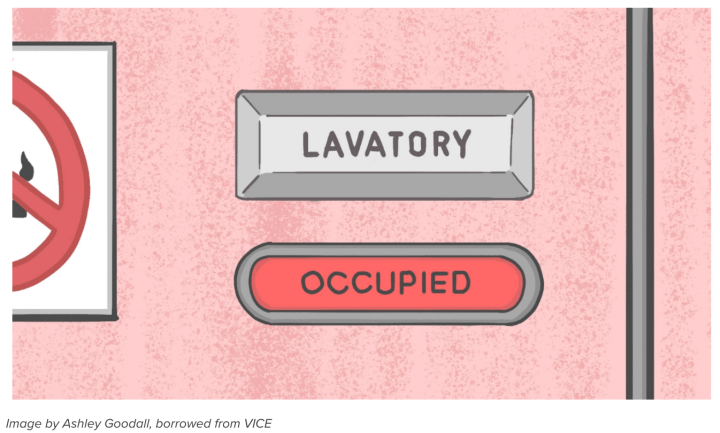
I was going to write about my Amsterdam and Antwerp experience, but decided to share the perils of travelling without Imodium instead. Yes. I lived through some people’s worst nightmare. And I didn’t just live it any old place.  I lived it on Icelandair Flight 506, from Keflavik to Amsterdam.

I had felt all girl-scout confident and prepared on the way, because I felt I had all the necessaries for an emergency. Including Imodium. Imodium, for the benefit of the ones unfamiliar with the name, is a brand name of generic loperamide and is used to control the symptoms of diarrhea. I had checked it in my luggage, because I wasn’t anticipating anything. But that’s betrayal for you. It just comes out of nowhere. It’s almost always unexpected. I have no idea what I ate. Whatever it was, my traitorous stomach just decided to rebel.

I told myself I could hold it until we landed in Schiphol International. You know how sometimes you think it’s just a small rumble, a bit of a fart, it’ll sort itself out? There we were, seatbelt sign on, everyone strapped in our seats, about half an hour away from actually landing on the tarmac when my stomach decided it had had enough. Faced with the reality of being in a metal tube filled with recycled air and potentially asphyxiating everyone on board, I scrambled up and over Le Hubs, who was trying in vain to get me to stay in my seat, and headed for one of the bathrooms, which was locked, because they lock the doors of the lavatories before landing.

“We’re landing in fifteen minutes!” said the flight attendant who tried to get me to go back to my seat. “This is an emergency,” I hissed. There must’ve been a really feral look in my eye, or maybe the kind of wild desperation that drives people to do unspeakable things, because she didn’t argue any further with me.

Is there anything worse than everyone knowing you’re about to go into the shitter when you know it isn’t going to be a quiet session? Because I would say yes. It is a thousand times worse when said shitter is an airplane lavatory at the front of the plane with an attendant strapped to her seat beside it because the plane is supposed to be going down from a higher altitude to land. Add in you sitting there trying to go as discreetly as possible but knowing it’s pointless  because you’ve been holding everything in so long it’s too late to be coy about setting your large intestine free, turbulence shaking you around as you sit there  in a cold sweat, wondering if your stomach is done with you and if it’s safe to come out,  then someone starts banging on the door saying the plane can’t land if you’re still in there doing god knows what so you hurriedly clean yourself up and emerge trying to look like it’s just another day in Normal Town. And then you go back to your seat to face a husband who is as mortified as you are and avoid eye contact with everyone and everything for the next few minutes as the plane finally touches down and you’re just praying to God no one recognizes you or even remembers you on the baggage carrel.

(Which, to my relief, no one seemed to. At least that’s what I like to think.)

On my first plane ride with a group of other people I worked with on the school yearbook,  I remember one girl making sure she took an Imodium before we started off. I asked her what it was for and she said she just wanted to make sure nothing untoward would happen on the way. I thought it was kind of silly to willingly constipate yourself when your stomach was fine, but it turns out she was right in the end. I was wrong. Oh, so wrong. I still don’t think it’s a good idea to take Imodium when there’s nothing wrong with me, but from this day forth, I vow never to be without it at all times.

Online Travel Tools for Obsessively Compulsive, Anally-Retentive You

Online Travel Tools for Obsessively Compulsive, Anally-Retentive You

I am chronically incapable of being footloose and fancy free without doing any due diligence, of visiting a place I’ve never been to and just seeing where the wind will take me.  If the good lord wanted me to go where the wind blows, he would’ve made me a dandelion instead of an obsessive, anally-retentive girl scout. I know, I know. I sound like a pill. I’m only a pill in the beginning, though.  I promise. *hand on heart* Once I’ve gotten everything under control and can tell myself I’ve done all I need to do to be prepared, I can be as cool as a cucumber.

But first, I need control. I need a sense of knowing. I need security. I need to know what I’m going to do, where I’m going to go, what I’m going to eat, and how I’m going to get to where I want to go before I do it, especially when it comes to travel. (You can take a girl out of a travel agency, but you really can’t take a travel agency out of a girl!) 

Google has a suite of travel tools that I use a lot.  Flights is great when you’re shopping for airfare, and I particularly love their “flexible dates” option and the way prices and locations change automatically depending on where in the world you happen to be hovering over. Hotels is a very well thought out, intuitive way to look for possible places to stay -it’s easy to read reviews, check out photos and compare prices. Maps is one of my favourite and most trusted travel tools. It gives a sense of security in an otherwise alien place, because you’ll always know where you are and how to get where you want to go, especially if you’ve downloaded a map of the area in advance.

I don’t feel constrained to book travel directly on Google’s website though. Neither should you – if you can get points booking travel on a certain site or with a certain type of credit card, by all means do so. I like to book directly with the airline when it comes to airfare, but with hotels I can be a little more flexible. I tend to go with Expedia for sentimental reasons, and also because they have very competitive prices and an excellent points program. 

The following sites are what I use when I go in-depth. Other than the usual go-tos like Lonely Planet and TripAdvisor, I’ve found some really interesting information off of these sites, and you may already know some if not all of them. I hope they help you as you prepare for your own trips too! 

Wiki Voyage

https://en.wikivoyage.org
WikiVoyage provides a condensed, Lonely Planet-esque overview of your destination. I use it particularly when I want information about districts and modes of transportation but don’t want to feel overwhelmed or pressured to book anything. Like Wikipedia, it’s less about the bells and whistles and more about the actual information but don’t let the wall of text intimidate ya. There’s a lot more information to digest than just districts and transportation, although that is primarily what I use WikiVoyage for.

Atlas Obscura

https://www.atlasobscura.com/
Yes, attractions are famous for a reason, and they should definitely be seen, it’s just that sometimes being able to enjoy what you see becomes impossible when there are too many people also wanting to do the same thing. If, like me you like to avoid touristic mosh pits, Atlas Obscura is great for the weird, the quirky, the secret little things that not a lot of people may be into. It also welcomes suggestions from fellow travelers, and is filled with unusual, off-the-beaten-path suggestions (hence the name!).

Taste Atlas

https://www.tasteatlas.com/
When in Rome, do as the Romans do, and sampling the local cuisine is the best way to feel like a local. I like to try and not eat anything other than local staples wherever I get to go, to get a really well-rounded experience of what living in a certain country must feel like, and Taste Atlas is an invaluable resource. Is food a big part of how you travel? It should be! 

Reddit

http://www.reddit.com
Lastly (but not leastly), never underestimate the power of Reddit. There’s no better advertising than word of mouth, and Reddit is invaluable for checking out what the locals say. Think about it as a place to go for insider information, because locals can (and do) say a lot!

Do you have any travel sites that you’d recommend? Feel free to share, and happy travels!


Image from Jumpic

Arroz a la Cubana: Touchdown

Arroz a la Cubana: Touchdown

I had nightmares of getting mugged at the airport. The bestie had relayed a cautionary tale about a friend of a friend who’d set her bag down one minute, and found it gone the next. So there I was, in Varadero’s Juan Gualberto Gomez Airport, looking around furtively every so often like I was deep in the heart of Colon Street with a target on my back. I sometimes forget that if you’ve ever emerged intact from the bowels of old Cebu City, you can survive anything.

Still, it never hurts to be cautious.

Then again, I don’t remember the airport he had specified. Had it been Havana International? If it was, I was being overly cautious for nothing. Nothing happened. Everything ran like clockwork. The Cubans have the tourist machinery down to a fine art. Unlike Manila, there is no chaotic mess, no street hawkers, no shady characters lurking in the shadows, waiting to take advantage of you the moment you exit baggage claims. If there were, I didn’t see them. The whole process, from de-planing, to customs, to baggage claim to arrivals, is smooth, easy and fancy-free.

If you’re flying out of Canada, more often than not the price of the plane ticket includes the cost of the required tourist visa. The airline provides you with a tourist card (which is the visa itself) to fill out on the plane before landing. Be sure to read the instructions before writing anything down because erasures are not allowed. The lady beside me wrote the departure date instead of her birthdate and had to pony up $50 CAD for a fresh slip, something that upset her very much, because she spent a good twenty minutes berating herself while her husband tried to calm her down. Not a good way to start a vacation, that’s for sure.

At customs, the immigration officer checks your documentation – as always, it’s best to be sure your passport is valid for at least six months. Cuba does require proof of insurance. While proof of your provincial insurance (like your OHIP card) is acceptable, I took the extra step of purchasing extra insurance from the airline (Air Transat, $22 CAD) just in case. He didn’t ask to see the extra insurance, just took my picture and wished me on my way.  You can speak Spanish if you like, but English is not a problem at admissions. Just in case, I’d recommend downloading Google’s Translate app. It’s only polite to try and speak the language, rather than expect everyone to know English wherever you go. 

Anyway, after customers comes baggage claim and arrivals. Unlike Cebu or Manila, there are no aggressive hawkers waiting outside to get you to take a taxi or a dubiously priced rent-a-car. I had booked my vacation as a package – airline and hotel in one – which came with roundtrip airport transfers. (Highly recommended, if you don’t want to stress about how to get to your accommodations.) Upon exiting arrivals, you’ll find airline representatives – Air Transat, Sunwing, RedTag, etc. – waiting outside. They’ll direct you to the shuttle you’re assigned to, which turned out to be a big, air-conditioned bus that stops at pre-arranged resorts along the Autopista Sur, the main highway that stretches into Varadero. 

I had wanted to get my currency exchanged at the airport, but there was no booth in the arrivals hall so I ended up doing it at the resort instead. Cuba has two currencies, the Cuban Convertible Peso (CUC) which is for tourists with a roughly 1:1 exchange rate, and the Cuban Peso, which is what the locals use. While it means visitors don’t get to pay the same rate the locals will for a specific item, I like how savvy it is when it comes to making sure they don’t get taken advantage of.