What Books Did You Read in 2024?

What Books Did You Read in 2024?

It’s that time of the year again! The time where I make excuses for why this post is late, blah blah blah and crap. At any rate, we’re mid-April now so I’d better get this out before it’s too late and I end up making another one of my monster two-year reading list mashes. Reading-wise, it appears I skewed more fantasy than usual, which was a first for me! As always, you’re welcome to skip to the standouts below 🙂

Memoirs, Memories and Me
The Meaning of Mariah Carey – Mariah Carey
Crying in H-Mart – Michelle Zauner
The Widow’s Guide to Dead Bastards – Jessica Waite
Robin – Dave Itzkoff
From Here to the Great Unknown – Lisa Marie Presley and Riley Keough

Sweet, Sweet Fantasy Baby
Starling House – Alix E. Harrow
Fourth Wing / Iron Flame – Rebecca Yarros
The Hollow Places / A Sorceress Comes to Call / Nettle and Bone – T. Kingfisher
The Familiar – Leigh Bardugo
Voyage of the Damned – Frances White
The Ministry of Time – Kaliane Bradley
The Forgetting – Sharon Cameron
Once a Monster – Robert Dinsdale

Loveswept
The Beast / The Chosen / The Thief / Lassiter – J. R. Ward
Romancing Mr. Bridgerton – Julia Quinn
Swift and Saddled – Lyla Sage

Other Stuff
Argylle – Elly Conway
The Best Laid Plans – Sidney Sheldon
Snuff – Chuck Palahniuk
The Queen’s Bed: An Intimate History of Elizabeth’s Court – Anna Whitelock
Capote’s Women: A True Story of Love, Betrayal, and a Swan Song for an Era – Laurence Leamer
The Last Queen: Elizabeth II’s Seventy Year Battle to Save the House of Windsor – Clive Irving

Standouts
Shoe Dog – Phil Knight
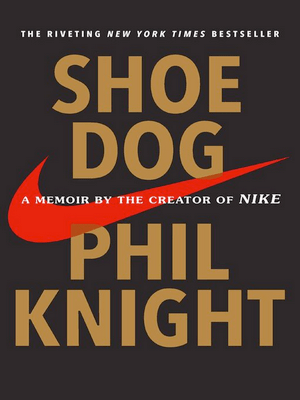
I was in Dublin the day after a riot broke out, and was confined to my hotel as it wasn’t safe to be on the streets. I’m not in the habit of reading the memoirs of entrepreneurs, but not knowing what else to do, I hung out in the lounge and picked this up, expecting a more detailed version of Prime Video’s Air (2023). I ended up enthralled with the story of Phil Knight instead. Shoe Dog isn’t just Knight’s story, it’s the story of Nike, his “third son.” Nike’s early beginnings, and its development into the behemoth it is today is way more captivating than any old shoe deal with a burgeoning basketball star and his indomitable mother. Not that Air was bad (go watch it), it was just a pleasant surprise to pick up a book expecting one thing, and find something else even better. Knight can make even accounting sound interesting, and Shoe Dog transcends mere selling and success. It’s a rollicking good story and is compulsively readable. I was very tempted to steal the book and take it home. I didn’t, and although I do now have my own legally gotten copy, may regret not giving in to that initial impulse to this day.
The Quiet Tenant – Clémence Michallon
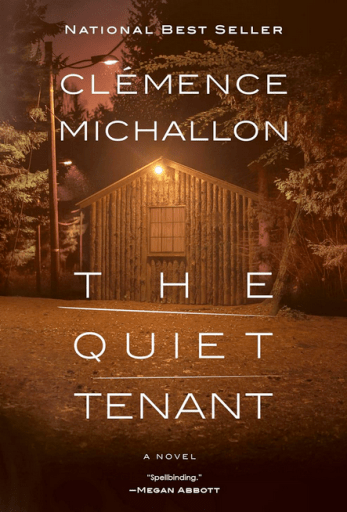
According to Libby, I read this book in one hour and twenty minutes, which doesn’t seem quite right. Pretty sure it took longer than that to finish. What is true is that I inhaled this book in one sitting, something I rarely do now, because my attention span has become woefully fractured. When a book grabs me by the eyeballs and refuses to let go until the last page has been turned, it’s a sign of how good the writing, the story, and the pace is. The New York Times calls The Quiet Tenant an “assured debut” and an “expertly paced psychological thriller” and I am inclined to agree. Michallon skillfully uses multiple voices to weave the narrative around a serial killer – the woman he keeps chained in a shed, the woman who loves him, and his daughter – masterfully ratcheting up the suspense and the dread, chapter by chapter as the ghosts of the serial killer’s victims chime in. It’s chilling. It’s great.

Mistborn: The Final Empire / The Well of Ascension / The Hero of Ages – Brandon Sanderson
Can Brandon Sanderson write? This guy from Wired doesn’t seem to think so. Although I am tardy to the Sanderson party, I do not agree with the guy from Wired. Brandon Sanderson is a good storyteller, even if he doesn’t seem to like using variations on the word “scream”. The Mistborn trilogy is a fun romp through a fantasyland of erupting volcanos, weird skies, ash, and magic. Read it if only to see if you agree (or don’t) with the guy from Wired.
Thornhedge – T. Kingfisher
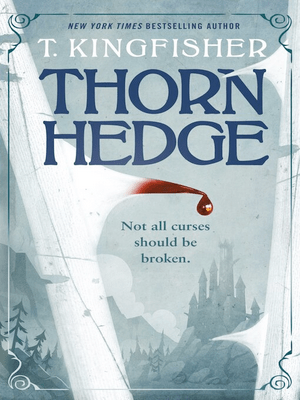
In Toadling – ugly and unsure, with barely any powers to speak of, Kingfisher has the opposite of a traditional protagonist. You may not want to read about her story, or even care. But you won’t be able to help yourself once you’ve started, because reading Thornhedge feels like someone is simply whispering the story in your ear as you leaf through illustrations of fairies, sleeping maidens in towers, with knights errant hacking their way through the brush. Using clean, uncomplicated prose, Kingfisher absolutely deserved the Hugo Award for Best Novella. Read this if you love re-imagined fairytales.
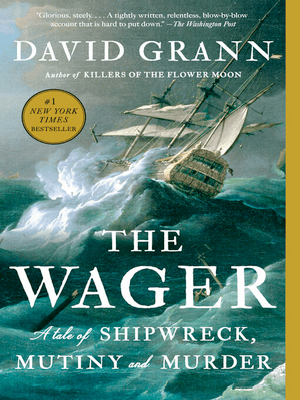
The Wager: A Tale of Shipwreck, Mutiny and Murder – David Grann
Grann’s characters are as fully fleshed out as he can make them, and this gripping tale of castaways fighting for survival while holding on to the tenets of honor and dignity is well worth the read. The Wager may be non-fiction, but all the pulse-pounding action makes it’s easy to forget that it is. Grann has penned a veritable thriller – and the tension is so tight, you might find yourself holding your breath as you turn the page, wanting to see what happens next.
What Books Did You Read in 2022 and 2023?

What Books Did You Read in 2022 and 2023?

Good lord, is it the end of April already? Time does fly the older one gets. I’ve been meaning to post this reading list up for a good long while now and am finally doing it because if I don’t, I will blink and it’ll be next year. Anyway, better late than never is my ninja way, so here are my book reads of the past two years. It’s a paltry list for 24 months (grad school aside)… I’ve really got to get back on the book wagon. As usual, skip to the end for the standouts!

Disclaimer: you’ll notice a definite uptick in the romance genre, which was intentional. It really would’ve been more, if I hadn’t read a certain Booktok-favoured title that was SO bad, I gave up on my quest to read only romance for the rest of 2023. Booktok is a lie. It’s a lie. *cries*

Thrills and Chills
Six Four – Hideo Yokoyama
The Final Girl Support Group – Grady Hendrix
Notes on a Scandal – Zoë Heller

Sweet Sweet Fantasies Baby
My Name is Morgan – Sophie Keetch
Tress of the Emerald Sea – Brandon Sanderson
Uprooted / Spinning Silver – Naomi Novik
Tomorrow, and Tomorrow, and Tomorrow – Gabrielle Zevin

Loveswept
The Prince of Broadway – Joanna Shupe
The Governess Affair / The Duchess War – Courtney Milan
You Had Me At Hola – Alexis Daria
A Worthy Opponent – Katee Robert
Enchanted – Elizabeth Lowell
Daring and the Duke – Sarah MacLean
For My Lady’s Heart / Shadowheart / Flowers From the Storm – Laura Kinsale
Icebreaker – Hannah Grace

History Re-imagined
The Forbidden Queen – Anne O’Brien
The Wedding Portrait – Maggie O’Farrell
The Secret Life of Josephine: Napoleon’s Bird of Paradise – Carolly Erickson

Memoirs, Memories and Me
I Feel Bad About My Neck – Nora Ephron
Paul at Home – Michel Rabagliati
Persepolis 1 / Persepolis 2- Marjane Satrapi
I’m Glad My Mother Died – Jennette McCurdy

Behind the Scenes
The Rise and Fall of Ancient Egypt: the History of a Civilisation from 3000 BC to Cleopatra – Toby Wilkinson
Quiet: The Power of Introverts in a World That Won’t Stop Talking – Susan Cain
Missing From the Village – Justin Ling
Little Girl Blue: The Life of Karen Carpenter – Randy L. Schmidt
All of the Marvels – Douglas Wolk
The Bad-ass Librarians of Timbuktu – Joshua Hammer
The Madness of Queen Maria: The Remarkable Life of Maria I of Portugal – Jennifer Roberts
Young and Damned and Fair – Gareth Russell
Fire Cannot Kill a Dragon – James Hibberd
Pandora’s Jar – Natalie Haynes
The Last Mrs. Astor : A New York Story – Frances Kiernan

I Don’t Care What You Say, Re-reads Still Count
A Stranger in the Mirror – Sydney Sheldon
Tapestry – Karen Ranney
Warrior’s Woman / Keeper of the Heart / Heart of a Warrior – Johanna Lindsey
The Prize – Julie Garwood
A Knight in Shining Armor – Jude Devereaux

2022
Brazen and the Beast – Sarah MacLean
He’s a Covent Garden gangster who rules the dockyards, speaks in grunts, and only gets verbose in the throes of passion. She’s an intelligent spinster whose elder brother is running the family’s shipping business into the ground, and can’t (or won’t) shut up until she’s physically teased to the point of incoherence. They’re made for each other! Barring a few, clunkily obvious signs that this regency romance was written in the age of must-have consent and equality, this is witty, fast-paced and ridiculously horny. Read if you like bodice-ripping, heavy-breathing, smutty romance.

The Catalogue of Shipwrecked Books – Edward Wilson-Lee
Fernando Columbus is not the first name that comes to mind when one thinks of the Renaissance, and Wilson-Lee makes the argument that he really should be. This professional courtier and illegitimate second son of Christopher Columbus revolutionized indexing, cataloguing, arranging, mapping, research, and building libraries. If not for the circumstances of his birth, it is very likely that he would’ve been the heir to Columbus’ fortune instead of his useless excuse for a half-brother. This is one of the best biographies I’ve read in a long time, and touched many of the things I enjoy – biographies, relatively obscure Renaissance figures, obsessive-compulsive list making, and a love of books. I enjoyed it so much, I used it as the subject for a book talk assignment, which I like to think went over quite well – if not with the class, then at least with my instructor 🙂

Stiff: The Curious Lives of Human Cadavers – Mary Roach
Do not read Stiff if you are eating. Do not read Stiff if you are squeamish. Do not read Stiff if you do not want to know how bodies decompose when they are left on their own without the benefit of embalming. Definitely read Stiff if you are interested in knowing how cadavers prove their usefulness: as crash test dummies, as anatomical models, and as guinea pigs for experiments. And definitely read Stiff if you would like to know how fearless Filipinos, probably hopped up on whatever goes into anting-antings, defied a hailstorm of bullets in the Spanish-American War and in doing so, became the impetus for ballistic research and the concept of “stopping power”.

2023
Yellowface – R.F. Kuang
No one in Yellowface is likeable. None of the characters are reliable narrators. When your main character is a caricature of an entitled white woman (terminally insecure, petty, selfish, self-aggrandizing, narcissistic, delusional) jealous of a “perfect’ Asian author who turns out to be cold, fake, pretentious, and fond of mining the trauma of others for her art, reading becomes a challenge, because we are wired to like leading characters, even when they’re terrible people making terrible choices (plagiarism is never a good idea!). I’m not a fan of the sanctimoniousness that comes with race politics, so if the author’s intent is to make you feel something, she succeeds wonderfully. Yellowface is a good read, not only because it makes you feel, but also because this single-white-female x cancel culture x appropriation story has Twitter exchanges, references to real life personas, and a disdain for the behaviour of publicists, agents and suck ups that seem too sharp to be made up. The scenes so sharply specific, it made me wonder how much of a roman a clef this book really is (juicy!). Read if you like trainwrecks, good writing, and are prepared to feel uncomfortable.

All the Murmuring Bones – A.G. Slater
All the Murmuring Bones is an atmospheric, mesmerizing tale about one family’s ill-gotten gains. It’s a gothic fantasy that marries Hans Christian Andersen with Mermaid Forest. One thing about the heroine though: she doesn’t seem able to feel very much. Even when she says she’s scared or terrified, she keeps a level head at all times, outwitting murderous ghosts and menacing kelpies. Read if you like haunting fairy tales and don’t enjoy weeping, anxiety ridden heroines.

What Books Did You Read in 2021?

What Books Did You Read in 2021?

I finally decided to do something about the paralyzing ennui of lockdown, so I went back to school last September. I didn’t know it then, but that spelled the end of reading for fun. Reading for grad school requires a bit of a chopped and skrewed approach, as opposed to reading something cover to cover. It took a lot of  getting used to, and I got snowed under by the amount of reading required! By the end of Fall Term, I was pretty much tapped out, and spent the winter break in a heap on the couch, comfort-watching Mad Men in a bid to self-soothe. 

Needless to say, I didn’t quite hit my self-assigned annual reading quota (oh, to read 100 books a year like some people!). Oh well. Maybe in 2022? Ha! If only. Anyway, as usual there’s no rhyme or reason to my reading choices, and this time around I chose to simply divide the books by Fiction/Non-Fiction and my ever-present re-reads.  About 95% were all read and available from Overdrive, through the generous auspices of the Toronto Public Library, and hopefully they  give you ideas for what to read next. Scroll past the titles to my top picks of 2021, if you’re so inclined!

Fiction
The Mists of Avalon – Marion Zimmer Bradley
Shadow and Bone / Siege and Storm / Ruin and Rising – Leigh Bardugo
Red Queen / Glass Sword – Victoria Aveyard
Howl’s Moving Castle – Diana Wynne Jones
The Ballad of Songbirds and Snakes – Suzanne Collins
The Invisible Library – Genevieve Cogman
The Library of the Unwritten – A.J. Hackwith
The Woman Before Wallis – Bryn Turnbull
Fire From Heaven / The Persian Boy / Funeral Games – Mary Renault
Never Mind / Bad News / Some Hope / Mother’s Milk / At Last – Edward St Aubyn
The Knife of Never Letting Go / The Ask and the Answer / Monsters of Men – Patrick Ness

Non-Fiction
God’s Jury: The Inquisition and the Making of the Modern World – Cullen Murphy
The Billionaire Murders – Kevin Donovan
I’ll Be There for You: The One About Friends – Kelsey Miller
No Place to Go: How Public Toilets Fail Our Private Needs – Lezlie Lowe
There Was a Little Girl – Brooke Shields

Re-reads Still Count
Champagne Supernovas – Maureen Callahan
The Silmarillion / The Children of Hurin – J.R.R. Tolkien

The 2021 Standouts

The Poisonwood Bible – Barbara Kingsolver
Every so often I stumble across a book that sings, and wonder where I was when it hit shelves. At the apex of Belgium’s secession from the Congo, five young women struggle to understand their place in the world – a place their father, an American Baptist missionary, believes it is his calling to save. Stymied by cultural differences, the political climate, a misguided saviour complex and the untameable land itself, each woman responds to her situation in different ways – with grace, with belligerence, with defeat, with defiance, with unbridled curiousity. The Poisonwood Bible is an eloquent depiction of life in post-colonial Africa and what becomes of visitors who presume to take it for granted. Published in 1998, this is a beautifully complex novel: part love letter, part indictment, a chorus of five female voices rising from the heart of darkest Africa. This is great historical fiction.

The Centaur’s Wife – Amanda Leduc
Sometimes, good books require the reader to let the journey take precedence over the destination. The Centaur’s Wife is a labyrinth of a story, like stepping into a dark fairytale with a dash of post-apocalyptic nightmare. It never quite seems to make sense, but that’s part of its allure. “In the beginning,” it begins, “a horse fell in love with a woman.” It’s hypnotic, and enchanting, and very much worth your while.

Monstress – Lysley Tenorio
Nick Joaquin once opined that the Filipino has mastered the art of the short story, and Lysley Tenorio’s Monstress proves him right. Blending stories of the Beatles and Imelda Marcos, with scenes from bygone days when Filipino B-movies cast their long shadow, Tenorio has a special connection to his heritage, and it shows. The scenarios are familiar, the stories written in a familiar cadence, some rhythmic drumming you’ve heard once, a long time ago, but never quite forgot. Monstress is a collection of short stories that pack a punch, especially for a homesick Filipino expat like me. Read it, if only for the incandescent “The Brothers” alone.

The Witch’s Heart – Genevieve Gornichec
“They’re odd. We’re odd,” shrugs Angrboda, who has nothing but love for her three children. Her first is a girl born half rotted with decay, her second a wolf, and her last a serpent; still, she dismisses their strangeness with as much nonchalance as she dismisses having been burned thrice and speared through the heart. With the Witch’s Heart, Genevieve Gornichec accomplishes the impossible – she makes us root for the children of Loki, the three hellspawn of chaos who are destined to bring Ragnarok, and the woman who bore them. It’s like Circe, except with Vikings.

What Books Did You Read in 2020?

What Books Did You Read in 2020?

“… we all see it. I didn’t tell you. You didn’t ask me. I never opened my mouth and you never opened yours. We’re not even in the same year together, let alone the same room… except we are together. We’re close. We’re having a meeting of the minds. We’ve engaged in an act of telepathy.”

Stephen King, On Writing: A Memoir of the Craft

What is a book, but a snowflake frozen for all eternity? It’s a unique imprint of a memory, a dream, words that run together to form a story. Unlike the untenable ether of dreams, a book can be picked up at any time of the day or night, and suddenly you’re there, standing inside the writer’s mind, seeing, hearing, tasting, smelling. It’s magic. The best kind, because it is so willingly given and so generously shared, with so little being asked in return. 

If the year that’s gone by has given you nothing but more time to yourself, a book would’ve been one of the surest ways to stay sane. Here, I list all my reads of 2020. As always, my choice of reading material doesn’t follow rhyme or reason, although I do think I read a lot more memoirs this time around. When one’s life becomes rote, reading about other lives just seems that much more interesting!  The following may hopefully give you ideas for what to read next. About 95% were all read and available from Overdrive, through the generous auspices of the Toronto Public Library.

I also list my top five unforgettable books of the year. To get to them, scroll down to the standouts section, and feel free to share your own in the comments below.

Memoirs, Memories and Me
Born a Crime – Trevor Noah
The Most Beautiful – Mayte Garcia
Full Service – Scotty Bowers with Lionel Friedberg
The Outsider – Jimmy Connors
Home / Home Work – Julie Andrews
Inside Out – Demi Moore
Me – Elton John
Permanent Record – Edward Snowden
Open Book – Jessica Simpson
How to Make Love Like a Porn Star: A Cautionary Tale – Jenna Jameson

Baby It’s Real (So, So Real)
Helter Skelter – Vincent Bugliosi
Catch and Kill – Ronan Farrow
Bachelor Nation – Amy Kaufman
Uncanny Valley – Anna Weiner
No Filter: The Inside Story of Instagram – Sarah Frier

Books for Grown-Ups and Shit
All the Light We Cannot See – Anthony Doerr
Normal People – Sally Rooney
The Bone Clocks – David Mitchell
Less – Andrew Sean Greer
Bring Up the Bodies / The Mirror and the Light  – Hilary Mantel

Royal Pains and Other Reimaginings
The Last Empress / Becoming Madame Mao – Anchee Min
Daughters of the Winter Queen – Nancy Goldstone
The Queen’s Secret – Karen Harper
The Other Windsor Girl – Georgie Blalock
The Paris Wife – Paula McLain

Myths and Monsters
The Silence of the Girls – Pat Barker
The Children of Jocasta – Natalie Haynes
The Dragon Waiting – John M. Ford
The Library of Legends – Janie Chang

Gone Girls and Gone Boys
The Daughter of Time – Josephine Tey
Picnic at Hanging Rock – Joan Lindsay
Woman on the Edge – Samantha M. Bailey
The Butterfly Girl – Rene Denfield
The Marsh King’s Daughter – Karen Dionne
The Missing Millionaire – Katie Daubs

Atbp.
The Collected Stories of Jessica Zafra – Jessica Zafra
All My Puny Sorrows – Miriam Toews
Tidelands – Philippa Gregory
Gods of Jade and Shadow – Silvia Moreno-Garcia
Dune – Frank Herbert
The Ocean at the End of the Lane – Neil Gaiman
A Gentleman in Moscow – Amor Towles

.

The 2020 Standouts

The Child Finder – Rene Denfield
Starts off slow and a little predictable.  One can sense the twist from far away, but by the end all the tragic threads have been pulled together so tightly, it sings like a tightly corseted nightingale.  Read this if you want something in the tradition of The Lovely Bones and Room.

The Immortalists – Chloe Benjamin
Ugh I hate her so much. Chloe Benjamin writes so bloody well it makes me want to claw my eyes out. The Immortalists tackles the bonds between siblings, and their ways of coping with the loss of each other, which got me right in the feels. Read this if you love your siblings.

Pachinko – Min Jin Lee
I don’t obsessively follow best of, or must-read book lists; part of the fun is finding books that turn out to be amazing reads without giving in to the hype So when. Pachinko came out, to great fanfare in 2017, it sailed completely over my head. Mr. King’s analogy of writing as telepathy is wonderfully apt – you can pick up a good book and a good story at any particular time, and it will still speak to you. Pachinko is a multi-generational story of stoic strength in the face of exile and discrimination in a land that refuses to acknowledge the humanity of those they deem foreign-born. Clean, straightforward and neat of prose, Pachinko  still manages to hit you in the solar plexus with a devastatingly effective one-two punch. What a read.

Starlight Tour: The Last Lonely Night of Neil Stonechild – Susanne Reber and Robert Renaud
Structured more like a screenplay than a novel, this is bound to get optioned if it hasn’t been already.  Starlight Tour is a chilling, heartbreaking account of the abuses indigenous people of Canada endure. Compelling, bleak, an indictment of callousness and police brutality, it is a reminder that the mistreatment of a proud people – whose original claim to this land has been cruelly shoved into the recesses of Canadian memory – perpetuates to this day.  A must read, though the inclusion of a number of graphic police photos are not for the faint of heart. 

The Once and Future King – T.H. White
How have I passed on this for so long? I really shouldn’t have.  Guinevere is a lying, cheating harlot, Lancelot is a whiny little bitch, Mordred is truly the scum of the earth and a kingly, world-weary Arthur smiles benignly throughout the whole mess.  T.H. White’s re-imagining of the Arthurian legend has more than earned its place as a modern classic. I love this book and hate myself for only reading it now, but better late than never is my ninja way!

A Bad Gay and Other Stories: A Mini-Review of The Bone Clocks / Less

A Bad Gay and Other Stories: A Mini-Review of The Bone Clocks / Less

I finally finished The Bone Clocks. I kept putting it off to do other things; I’d read a chapter and fall down the rabbit hole for an hour, and then get distracted again. It’s not the book’s fault, I don’t think. I just couldn’t focus. Scratch that, maybe it’s the book’s fault. Just a little. It’s told in five sections, by four different points of view. Although David Mitchell is clearly intellectual and formidably well-read, the narration was random and rambling and I would catch myself wondering – what was the point of all this? Why should I care about this or that protagonist? What’s around the riverbend? He answers my questions in the last third. My only conclusion is that David Mitchell may written it while on an acid trip, because the shit that goes down is so bonkers, so weird, and so out there, I had to reread some sentences just to try and piece it all out in my head. That’s what happens when words like psychodecanter, neurobola, ingress, scansion, etc. are thrown at you out of nowhere like a barrage of psychic projectiles. It kind of reminds me of that Brampton video that went viral last week – just another a lovely summer day in a nice, quiet suburban neighbourhood, then a car comes careening in out of nowhere, smashing into everything like it’s a scene out of a Fast and the Furious franchise.

#

Unlike The Bone Clocks, I had no problem finishing Less. It’s an easier read. If there’s any takeaway I have from it, it’s that Andrew Sean Greer is a masterful storyteller.

Nothing seems to go right for Arthur Less; absurdity is so much a part of his life story, it is his life story. It is, in parts, hilariously tragicomic. I laughed like a loon when he gets told to his face that the reason his work hasn’t been accepted into the gay canon is because he is a “bad gay” for focusing too much on the sads and never giving his protagonists a happy ending (“But Odysseus returns to Penelope!”). I also giggled at his dogged determination to get his VAT back, no matter what it takes, because he’s American, dammit all to hell.

I envy Greer his control. He repeats the use of certain words or phrases (“They are not kidding”, “An Evening With Arthur Less”, “Why?”) to add levity, and rein in the constant flashbacks and it’s like watching an expert puppeteer at work, tongue firmly embedded in cheek.

Not that I agree with how it all went down. I don’t feel the ending was deserved, but (here be spoilers!) that is probably because I have very little patience for aimlessly frivolous people who seem to think it’s okay to ask their friends to Save the Date, then go through with the whole kit-and-boodle, only to turn around after a scant twenty-four hours of being married and say, um, I don’t think I should have done this…? Yes, Britney Spears did it too, but she was drunk and in Vegas. In Less, it turns out to be an utterly premeditated, lousy, wasteful, overly dramatic attempt to get attention. It’s like Sally Rooney’s Normal People – if they had just talked it out, they would’ve been fine. Why do they never talk it out? Also, why do they always say what they don’t mean? I get that Arthur Less is emotionally scarred because he was unceremoniously dumped by the poet/genius/asshole he gave his youth to, which is why he pushes everyone who gets close to him away, but really, fifteen years of stewing in his own drama? Please.

Still, if the end goal was to give a gay protagonist a happy ending in order to get included in the gay canon, Mission Accomplished. I can almost hear Andrew Greer muttering “am I a good gay now?” to his critics. I will give him this: he is a very good gay. They were not kidding.

Body Talk: A Normal People Book Review

Body Talk: A Normal People Book Review

Today’s theme is “damaged,” brought to you by Sally Rooney’s Normal People (the book, not the TV show).

My good friend K says Normal People is an accurate portrayal of how relationships work. If this is how relationships work, it’s little wonder most of them go kaput.

Normal People is about a young man and a young woman who hook up in their final year of high school and go on to attend the same university together. They have sex the whole time. It’s the biggest thing that connects them, the sex. They both have inner demons: the man is working-class, obsessed with being accepted and incapable of (or unwilling to) admit how much he likes her; the woman is rich, so she has the luxury of not giving a shit, but her life would be better if her brother wasn’t a physically abusive dickbag. Something about sleeping with each other makes them feel normal, or whatever way they believe normal is supposed to feel, and so they sleep together a lot, because apparently, that is what normal people do.

Young, horny and damaged: they’re normal people. Normal people who internalize too much.

A lot of feelings left unsaid fall by the wayside. Even if they’ve convinced themselves in some twisted way that they are only ever really truly honest – with themselves and to each other – when they’re together, they’re so busy having sex, at the end of it all, they’re so exhausted, they’re unable to form more than a few sentences. So it becomes all about internalizing, which forms the on-off dynamic of their exhausting, drawn out relationship. It sounds convoluted, but it’s really very simple. If they could stop for a minute and make time for an actual, honest conversation, maybe then they wouldn’t be so fucked up. I spent a lot of time i internally screaming at these two to JUST TELL EACH OTHER HOW YOU FEEL, because guess what? People can’t read minds.

But no one wants to read about a perfectly normal relationship. It’s boring. People want drama. They want tears. They want hurt feelings, and slammed doors, and aggressive break-up sex, or aggressive make-up sex, and moments where the heroine decides she’ll just go ahead and let men treat her like dirt because it’s the only time she really thinks she can feel something. People want to read about broken people. It’s the new escapism. And it works, because it’s true – perfectly normal relationships are boring. Nothing happens. There is no conflict. And conflict is what makes a story worth reading.

I like conflict. I just don’t like it when a particular conflict can be avoided. A relationship works when people are honest with themselves and with each other. Do normal people not talk to each other anymore? Relationships can’t work if no one in it wants to talk about it. And bodies can only say so much. Great sex isn’t a bad way to get a relationship going. Sometimes, it really is all about the horizontal tango. It’s certainly a fun way to spend the first few months of being together. But people can’t just bone all the time, and sex can’t function as a substitute for honest communication. Great sex doesn’t fix everything.

Maybe to some it’s just more romantic to be troubled, to have issues, to be damaged. Sometimes I wonder if people have fallen in love with the idea of being damaged, being conflicted. It’s as if being such frees them from the burden of having to be actual individuals who are accountable for their own actions, and anyone who says otherwise doesn’t understand how hard it is just to breathe, waaah, I’m the victim here, waaah. I’m not interested in assigning blame. I’m interested in: what are you going to do about your current circumstances? How are you going to fix it?

It’s why the character I would get along with the best in Normal People is Niall, the roommate. “Niall is a practical person,” the hero thinks. “He shows compassion in practical ways.” I like Niall. I like practical people. That’s just my version of normal.

What Books Did You Read in 2019?

What Books Did You Read in 2019?

I can’t believe it’s time for another one of these already. The year flew by so fast it nearly gave me whiplash, and it looks like this year may be more of the same. One blink and look, it’s mid-January!

In an effort to counteract the effects of too much TV, one of the things I set out to do in 2019 was to read more than I had the year beforeI like to think I did marginally better, even if I think I watched too much TV anyway. 

Still, reading is not everyone’s cup of tea; The Atlantic has an excellent article on why it affects some and not others. For me, reading is and always has been a form of escape, more so than TV, and a gift bestowed to me by both parents. My mother taught me how to read, and my father taught me how to enjoy it.  Because they had me very young, none of their peers had children I could grow up and play with. Whenever they would go out and socialize, it was up to me to find ways to amuse myself.  My favourite of their friends to visit were always the ones who had little libraries, because then I could just pick something, get lost in it and wait for my parents to finish having fun. It sort of turned me into an introvert (some may dispute this, but I really am quite shy) but I wouldn’t change it for the world.

And so, on to the list! As always, my choice of reading material doesn’t follow rhyme or reason but the following may hopefully give you ideas for what to read next. About 95% were all read and available from Overdrive, the digital arm of the Toronto Public Library. I also list my top five books unforgettable books of the year. They may not have been published in 2019, but they are ones I discovered and would definitely recommend. That’s the beauty of a great book, the really good ones never age! To get to them, scroll down to the standouts section.

“Classics”
Cosmos – Carl Sagan
Breakfast at Tiffany’s (and Three Other Stories) / In Cold Blood – Truman Capote
The Remains of the Day – Kazuo Ishiguro

Essays
The Year of Magical Thinking – Joan Didion
A Grief Observed – C.S. Lewis
Meaning and History: The Rizal Lectures – Ambeth R. Ocampo
Brilliant, Brilliant, Brilliant Brilliant Brilliant- Joel Golby
The Faraway Nearby – Rebecca Solnit
Best. Movie. Year. Ever. (How 1999 Blew Up the Big Screen) – Brian Raftery

#CanLit
All Our Wrong Todays – Elan Mastai
The Gown – Jennifer Robson
Son of a Trickster – Eden Robinson
The Hungry Ghosts – Shyam Selvadurai

Historical Fiction
The Secret History – Stephanie Thornton
The Only Woman in the Room – Marie Benedict
Muse – Mary Novik
The Viscount Who Loved Me – Julia Quinn
The Lost Season of Love and Snow – Jennifer Laam

Non-Fiction
America’s Boy: The Marcoses and the Philippines – James Hamilton-Paterson
1494: How a Family Feud in Medieval Spain Divided the World in Half – Stephen R. Bown
Kitchen Confidential – Anthony Bourdain
The Lost City of the Monkey God – Douglas Preston
SPQR – Mary Beard
Imperial Woman – Pearl S. Buck
Girl, Interrupted – Susanna Kaysen
The Sisters: The Saga of the Mitford Family – Mary S. Lovell
Let’s Just Say It Wasn’t Pretty – Diane Keaton
Jackie, Janet and Lee – J. Randy Taraborelli
The Immortal Life of Henrietta Lacks – Rebecca Skloot
Three Women – Lisa Taddeo

Now Lush TV Shows (and one Major Motion Picture)
The Mountain Between Us – Charles Martin
Codename Villanelle – Luke Jennings
Good Omens – Neil Gaiman & Terry Pratchett
A Discovery of Witches / Shadow of Night / The Book of Life – Deborah Harkness

I Don’t Care What You Say, Re-reads Count:
A Game of Thrones – George RR Martin
The Constant Princess – Philippa Gregory
The Hobbit / The Fellowship of the Ring / The Two Towers / The Return of the King – JRR Tolkien

Everything Else
The Light Between Worlds – Laura E. Weymouth
Aug 9 – Fog – Kathryn Scanlan
Gods Behaving Badly / The Table of Less Valued Knights – Marie Phillips

The 2019 Standouts
Educated – Tara Westover
What a whopper of a story this is. Tara Westover’s chronicle of a childhood spent homeschooled, raised on a farm with parents who felt the apocalypse could come any time is a hell of a memoir, and a great way to gain perspective – if you felt your childhood was horrible, you haven’t met Tara. It’s also a story of hope, and of how the love of learning can never really be stifled, a powerful reminder that dreams do come true if you want something badly enough and work hard enough to get it.

The Jaguar’s Children – John Vaillant
Although fictional, its protagonist finds himself in a very familiar, heart-wrenching position  – trapped inside an abandoned water tanker that is used to transport illegal immigrants over the Mexican border into the land of the free and the home of the brave, with a dying cellphone as his lifeline and only one number with an American country code. Told in stream of consciousness first-person, interspersed with a series of increasingly agitated text messages, The Jaguar’s Children is claustrophobic, terrifying and very difficult to put down and walk away from.

Lincoln in the Bardo – George Saunders
Like The Graveyard Book on drugs,  Lincoln in the Bardo reads as if DJ Earworm suddenly got literary and decided to do a mash-up of books, newspaper articles and quotable quotes. A re-imagination of events after death of Abraham Lincoln’s youngest son Willie, it’s an unusual book, and an acquired taste.  Reading the first few paragraphs may seem a bit strange, but the story comes to life as you settle into the rhythm and flow of George Saunders’ unique, award-winning experiment in prose.

Over the Edge of the World: Magellan’s Terrifying Circumnavigation of the Globe – Laurence Bergreen
As a Filipino, Magellan is a byword for the discovery of the Philippines, and its subsequent conversion to Christianity. To some of us, Magellan is an interfering, unscrupulous intruder who got what was coming to him. To the Spanish, he was a fearless crusader and adventurer. To the world, he was the one who braved the unknown in search of riches and glory. Magellan’s legacy may be a polarizing one, but Laurence Bergreen’s story of how he conquered unknown seas to prove that the world was truly round is arresting, and an educational insight into the social and economic mores of the time.

On Writing – Stephen King
Part autobiography, part how-to, with zero pretensions, On Writing has earned its status as the unofficial go-to for aspiring writers.  I’d always read about it mentioned by writers I admired, and finally decided to take the plunge and read it myself. It’s accessible and non-patronizing, and incredibly humanizing, especially when one is confronted with the true body of Stephen King’s work, definitely something that should be re-read at least once a year, if only for the kick in the butt it administers. My 2019 takeaway? Adverbs are anathema!